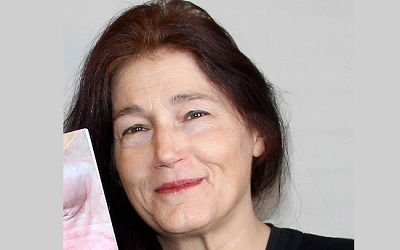
 Laura Rodley, a Pushcart Prize winner, has been nominated for the prize seven times and has also received five Best of the Net nominations. Her recent works include Turn Left at Normal (published by Big Table Publishing Company), Counter Point (published by Prolific Press), and Ribbons and Moths: Poems for Children (published by Kelsay Books).
With a talent for capturing the essence of life, Rodley’s writing resonates with readers of all ages. Whether exploring the natural world or delving into human emotions, her words evoke a sense of wonder and connection. https://www.youtube.com/watch?v=PClY8G6HQwk
Dry Arroyos
By Laura Rodley
“That’s it,” Lena dusted off her hands, leaving the corral gate open. “Shoo, shoo, Blakesly,” she waved her hands at the gray burro with a black stripe down his back. Never talked to before in such a manner, Blakesly kicked up his perfect oval hooves, trotted away.
Her appaloosas, Opal, Mermaid and Toper, had already galloped down the road when she shooed them away.
Next, the pigs. Lena opened their pen’s door. Three Gloucestershire Old Spots stood in a wallow of dust, taking turns dusting on it their backs.
Used to fluctuations in the water table and lack of rain, the water table had severely dropped so that the 300-gallon water tower that sat on stilts was empty. The ground was so hard to drill, it would require an excess of diamond drill-bits. Lena had no money to drill a well anyway. Funding promised for her doctorate research project had dried up, and along with it, her eligibility to apply for grant funding to drill a well. She had no money to pay for electricity, buy food for herself or her charges.
She’d sold her laptop, her furniture, but not her car, yet. The town tax office had put a lien on her house because she owed back taxes.
Desperate, she asked her father for a loan. He answered, “Animals are a luxury,” and declined.
She opened the rabbits’ hutch, let them nibble her nose one by one, placed them on the ground. “You’re on your own now. I can’t protect you anymore. You’ll have to find another home,” unwilling to think of hawks, coyotes, bobcats, or snakes.
Opening the goatpen, she struggled against tears. “Emond, Saks, Money, you must forage for yourselves now. Go,” she shooed them away as they nestled against her legs.
She’d tried getting a job at the grocery store, gas station, library, hospital. Nobody was hiring a fifty-year-old research student. She wondered if “Loser: widow with no children” was plastered on her forehead in ink only others could see.
That morning she emptied the last pint of water. Her landline and cellphone were shut off; an employer couldn’t call anyway. Listening to the tip-tip of the goats’ hooves usually lifted her heart. Now, only tears.
At one of her previous work-study university jobs, she had helped fill out papers for funding for people who met income guidelines to get their own wells drilled on their property. Some a quarter-mile away.
Here she was, losing her house.
She packed her knapsack with underwear, jeans, T-shirt, long-sleeved shirt, metal thermos, dried beef jerky, donned her hat, flumped down at her table, paralyzed. She’d judged people in her position, despised them. She was so much smarter than they, or so she thought. Abandoning the house, she’d live by the river. If she could get there, seven miles away, past dry arroyos.
Light was fading when someone knocked.
“Hey Lena,” someone hollered.
Reluctantly, she opened the door.
“Lena, saw the tax lien notice at town hall, they’re arranging to sell your house for back taxes. Heard you had no water. I couldn’t believe it. After all the help you gave us, my grandmother, getting grants for our drilled wells. Here’s two filled five-gallon buckets. You’re welcome to more anytime.
“You can’t be without water. Why didn’t you ask for help? You’re one of us now. Not a ‘Snowbird’ anymore.”
Suddenly, a goat bleated, bumped a bucket. “Whoa, someone’s thirsty.”
“Quick, open the bucket,” Lena said. “There, Emond.” As Emond slurped, Saks and Money stuck their heads in too.
A burro making its hiccuping noise before a bray sounded out.
“Blakesly!”
Blakesly stuck his head in, crowding the goats out.
The bucket was half gone.
Then clip-clopping resounded on the hard-packed dirt road. Opal, Mermaid and Topper stood looking at Lena, waiting their turn.
“Looks like I’ll need to get more water.”
“Looks like,” said Lena.
The rabbits hopped out from underneath the steps, licked drops on the stones.
“Bunnies, you came back too. I wonder where the pigs are,” said Lena.
“The pigs are how I knew to come see you. You’re the only one with Gloucestershires. I’d been hearing about your troubles but didn’t know how to approach you. Then the pigs came to my house, jumped in my kid’s little pool. They’re still there. If you could come and get them, I’d really appreciate it.”
“Let me get my boots on. I’ll need help herding them back. But I have no hay for them. Or feed. You want them?”
“No, I don’t. They are yours, Lena. You didn’t look in my truck yet.”
There were square bales of hay, and bags of grain.
“We need you to stay, help us fill out forms, get other families wells. You can’t go Lena. Please.”
“Alright, Ernesto, but I need a paying job. I’m flat broke.”
“I know. You can type, right? My sister needs someone to work in the dentist’s office.”
“Done,” Lena shook his hand. “Let’s get some hay to the horses and goats, then go get those pigs.” The horses and goats followed as they carried square bales to the barn.
 The Galway Review