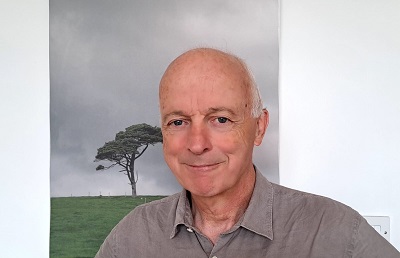
 Niall Crowley works on equality issues in Ireland and across Europe. His short stories have been published by The Galway Review, CafeLit, Pure Slush, and Spillwords Press. He was shortlisted in the From The Well competition in 2021, 2022, and 2023, and Colm Toibín International Short Story Award in 2022.
Belief in Healing
By Niall Crowley
Strange to be overwhelmed by a loneliness that seems ingrained, when I’m hardly ever alone. I engage easily with colleagues at work. Time frittered in Cashman’s of an evening is all too regular, where I converse effortlessly with patrons, known and unknown. I stroll the main street exchanging courtesies with neighbours of all ages and dispositions. Always a polite channel of pleasantries, ever a lively source of diversion. At some point after that day of pain, however, I was marked absent from these encounters. Some automated being took on to manage them for me. I could only watch over my interactions, unable to feel them.
Today I am purposefully solitary for what has become an annual observance. An hour’s walk out from the village and the narrow earthen path, that runs down to Trinity Well, stretches familiar before me. Threadbare hedgerows soar haphazard along each side to demarcate the way. Each step becomes an effort. This is a path I would dance along in the past, joshing with Mary. Now I am forever weary, and not from physical exertion. Loneliness has no cure, to my mind, yet I still seek resolution, whether by way of the therapist or by way of the gods. Today it is the turn of the gods.
Trinity Well used to muster a roiling crowd on Trinity Sunday, its Pattern Day. Most came on foot, others by horse and dray, the privileged ensconced in carriages. Moved by the quest for healing, devotion was their resolve on that day of the patron. A tripartite deity to be reverenced as such, the lord and saviour made human, god the father creator of all, and the Holy Spirit in whom all powers reside. The hierarchy, though wary of superstition, affirmed this devotion for binding believers close and holding them obedient. Distraction was equally a motivation for the pilgrim, though, with potential to put their ritual at odds with hierarchy. Distraction was tolerated, however, for corralling mischief and disorder to a single time and place.
My personal Pattern Day is not that Trinity Sunday as of old. It is the annual marker of when my weariness first asserted, that day of pain. Today is not my first performance as pilgrim, as three years have passed since then. While neither belief in the Holy Trinity nor desire for redemption drive me, the promise of healing is always attractive. As a pilgrim I can dream while in the role, but as a sceptic I hold no real hope of relief. I do not come in expectation of a cure, more by way of rehearsing the past, retracing those times spent here and where they led. Pain is to be replayed, as the therapist would have it, memory is to be called up time and again for review and possible insight.
The beehive structure of the well beckons me with its open invitation. Circular stone walls, rusted green with lichen, stand forever thick and sturdy. A corbelled roof swells up in rough slabs, pockmarked white with stains of efflorescence. The shrine is sheltered from its surrounds by an untidy screen of shrubs and bushes. The confined space left for pilgrims to make their rounds of the well, is worn. This is a place of solitude, of an endurance in solitude that captures my respect. It is a destination that calls me for the history and tradition it holds, even for the relief it portends, but principally for the memories it prompts.
Ritual observed with necessary solemnity and rigour, the pilgrims of the past would leave offerings by the well, and make their way back up to the road. Once there, crowds jostled around makeshift booths, demanding that fuel necessary for distraction. Porter and whiskey were served and consumed in ample quantity, Laughter and levity took the place of piety and devotion. Music sprang up that moved pilgrims to individual song and communal dance. Night fell, the mood would shift and the noise swelled. Shouts replaced song in places. Long held grudges found furious expression. Fisticuffs and brawls had the dancers run for cover. Pent-up grievance inflicted injury.
In my case, distraction preceded devotion. My initial encounters with the well and its magic were by way of Mary, whose parents owned the land above. There was no other place for us to be, without rousing squalid rumour. We came here for love of antiquity and its traditions, and ultimately for what seemed burgeoning love of each other. Distraction took the form of conversations, ever more intense. Shared exploration and inquiry. What to be? Each of us seeking to define a future free from the tired thread of what had gone before. More fraught, how to be? There was passion on my side, maybe on both sides. At times distraction evolved. Silence fell, we moved closer.
Now only devotion remains. Disciplined, I make the traditional three rounds of the beehive hut, head bowed, in despair rather than in prayer. Careful, I step over the threshold and down the two steps, gone slimy with damp earth, to stand over the well. A chill aura of disrepair pervades. The three small alcoves set into the wall, each to serve one strand of that Holy Trinity, are dishevelled in peeling whitewash. One alcove lies empty, another holds a finger-wagging Jesus of recent vintage, and the third hosts an incongruous Holy Mary. She is ever a welcome intruder, but already patron to most other healing wells around.
Stood in a grubby pint glass beside Holy Mary, there is a red carnation in full bloom. An offering of unusual nature, surely left by a recent pilgrim. I pause, distracted from my ritual of scooping water from the well for the blessing. Rendered unsteady by rising consternation, I sit into the vacant alcove. I feel an agitation flush through me, an experience marked absent over these last three years. It is a turmoil, strangely arresting and, despite its lamented absence, far from welcome. Slumped against the shabby wall of the well, I stare intently at that red carnation, to probe its intent and meaning.
Eventually I rouse myself to reach down and draw up a handful of the dull water. Three quick sips, each accompanied by the requisite sign of the cross, respect rendered to that Holy Trinity. Duty satisfied, I stumble out through the stone portal. Another man barrels into the space and I am forced to rear back to avoid being headbutted. Unbalanced, I am blinded by bright sunlight. The intruder lurches away from the portal, put off his stride by my sudden appearance. We stand disorientated, each thrown off our purpose, struggling to regain composure.
‘Sorry there. Didn’t see you coming out’, he stutters. ‘Why, it’s Jamie. I might have known.’
‘Seamus’, I am near shouting. ‘You almost had me back down the well there.’
‘I was working the field above for the in-laws, and spotted someone loitering. He disappeared sudden like, so I got worried he was up to no good. Had to come down to check.’
‘Tis only myself, living out the past as ever. I took a stroll down from the village to clear the head.’
‘Don’t know what you see in this place. Its day is long done, and it only attracts mischief. I’d clear it away, but there’d be hell to pay, as there’s no clarity who owns the land.’
We head back up along the pathway from the well, forced into single file. Seamus marches ahead with a proprietorial air. I step in behind him, as if subservient and in nervous obedience. Silence grips its hold. The whispers of the wind through knotted hedgerows insinuate suspense into the space between us. I become anxious at such unexpected encounters these days. I am carefully planned and habit driven in my ways. Even at that, Seamus would never feature in any such plan or habit. I reach for relief by way of meaningless exchange.
‘You’re busy these days, Seamus?’
‘Always at it. Endless paperwork, and then you still have to find time to tend to the animals. The life of the modern farmer.’
‘And how’s Mary doing. I’ve not seen her around this while.’
‘Agh, stranger by the day, Jamie. Gone full vegetarian on me, refuses to eat, handle or cook meat. What am I supposed to do, and me with the herd just out the front door? That one has to work out where her livelihood comes from.’
‘Ha. A woman after my own heart so. As well you know, me being a vegetarian of course. You’ll need to be rethinking those livelihood options of yours.’
‘Get away with you and your mad ideas. We don’t need the likes of that around here. Times are hard enough as it is.’
With a wave by way of dismissal, Seamus goes through a gate and back into the field, for whatever business he had with that masticating herd. I trudge on to the village, weariness at war with agitation, and, once there, retreat into the sanctuary of my cottage. No sooner in the door than I collapse onto the sofa to tame a heart gone pumping. Exhaustion from the long walk, for sure. Tension around an alarmingly honest outburst with Seamus, definitely. Most of all, confusion at the appearance of the red carnation. I press back into the cushions for comfort, as if afflicted, but really to recall and relive.
We had connected over red carnations, a chat about the delicacy of petals and the vivid flush of colour. Carnations grew in the rockery around the memorial, on the main street, to those who fought for independence. Must be chosen for the colour of blood, the mark of sacrifice, was my suggestion. I was corrected earnestly, though she turned strangely shy in doing so. Goes beyond rebellion, it appears. Carnations are symbols for devotion, red is the colour of passion and the marker of love. A simple exchange over red carnations became a gentle flourishing. Affinity burned bright if brief.
Each under the eye of the other, we probed the possible to re-imagine our potential. Just as we each animated change in the other, we both sought to be part of the wider change needed in the world beyond. Dreams raged around our love of nature, and shared urge to protect the wilderness that surrounded. Trinity Well housed our animation and dreams. Then Mary snapped the magic weft, on that day of pain. People are talking, she had insisted. I knew she was already spoken for, and understood the risk in gossip taking hold of family and friends. Without thought of protest, I colluded in submitting to convention. She took on to be hard. I couldn’t help but weep.
I root out a parcel from the shelf under the coffee table. Untouched for those last three years, a gift that never reached its destination. I wipe off the grit of time stalled and strip back the wrapping, and a book cover in flared orange is revealed. I am sufficiently tutored, to know that orange carnations, rare as they might be, are the colour of desire. ‘Paradiso’ is the title of the volume, after the restaurant up in the city. A name fit to capture that time in my life, that frantic composition of visceral moments. No more to the book, however, than a set of recipes, vegetarian recipes for the determined novice.
Novice as in new entrant, because she did not lack the necessary skills. The vegetarian that she discovered within became central to the change she sought. This strand of identity was asserted as she moved to redefine herself on her own terms. The leash of tradition was then tugged tight to curtail. Tradition has its boundaries, though, and could be that its shackles are now being loosened. Maybe those new directions Mary had sought are being reasserted, if Seamus is to be believed. A single red carnation, by way of offering to the Gods, might point to her desire for healing and renewal.
I feel loss for what might have been. I feel regret for what should have been done different. I feel. One red carnation softens and unpicks the layers that imprisoned emotion. Solidarity eases pain in sharing it. I had sought healing as a repair for what lay broken. Healing now presents as a renewal of that spirit of invention and a gift of energy to persevere. Weariness slackens its hold. I become anxious to return and complete my observance at the well, compelled by that solidarity. ‘Paradiso’ will be my offering, to stand on the other side of Holy Mary to that of the red carnation. Reconciled finally to what must be, open at last to hope in healing, and alert again for what might be.
 The Galway Review
Well done, Niall. Another great one.
Many thanks… great you enjoyed it