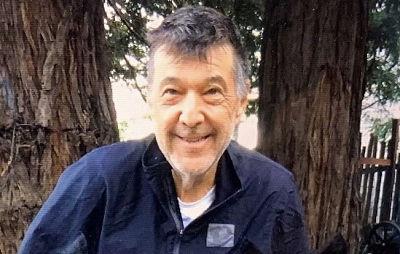
 Mark Sanford Gross is a writer and community storyteller based on the Northern California coast. He co-stewards Ulysses in 80, a global reading of Ulysses, and is the founder of Write Up the Coast, a project focused on connecting people through shared stories and conversation.
Language Behind Language
Ulysses, vibe coding, and the thrill of not understanding
I didn’t understand Ulysses. I still don’t—not really. I still get stuck. And that never stopped me. Because I know something is there. Waiting.
James Joyce wrote a book that takes place over a single day in 1904—one life, one ordinary day, the mundane stretched open until it becomes something else.
One day in Dublin, 1904.
I’ve never been to Dublin.
But I’ve spent days trying to find my way through it in the book.
And now—
I’m trying to keep up with something that changes by the second—vibe coding.
Trying to find my way through it in code.
I don’t understand either of them.
And I’m in both.
Over 80 days—Ulysses in 80—a group reading together, 10–15 pages a day.
I can do that.
The first time through, the group was guided by Cliona O’Farrelly and Deirdre Mulrooney in Dublin.
It ran through daily posts, messages, a mailing list—people from everywhere moving through the book together.
We didn’t know each other.
Just brief exchanges. The kind you have in small online spaces.
And then, after it ended, Cliona reached out.
Asked if we could talk.
About helping steer it the following year.
She mentioned my enthusiasm.
The way I stayed with it.
The way I kept people engaged.
I hadn’t thought of it that way.
But I said yes.
Second year, I’m helping keep people in it.
Still getting stuck. Still not understanding in any complete way.
But something is happening.
Things start reaching me.
Not everything. Not even close.
But enough.
Enough to stay.
Enough to say to someone else—come on, stay with it.
There’s a difference between understanding something and having something touch you.
I don’t live in understanding.
I live in that other place.
By the third year, we’re in it. A global group. People showing up—curious, hesitant, staying.
And I hear myself say—we need a website.
I have no idea how to build a website.
None.
But the idea is already there.
It’s not a question.
It’s just—next.
My husband remembers everything. Moves through a day logically, step by step.
He’ll stop me—“you already said that.”
And I laugh.
Because he’s right.
And still—this is how I move.
Not step by step.
More like—step in, step back, circle, return.
Stay.
It’s January.
Ulysses in 80 doesn’t start until June 1.
I’m at the FOG Design+Art Fair—moving through the crowd, asking people about their experience.
I pass a security guard.
Almost keep going.
Then I stop.
I ask him—what do you like? what stands out to you?
He looks at me like no one’s asked him that all day.
And then he’s talking.
And then he’s on the podcast.
And I realize—
this is something I learned to do.
Not from understanding.
From staying.
I worry about the recording.
I worry if it saved.
I worry about the voices.
And I do it anyway.
I sit in on a session—“Art in the Age of AI.”
BJ Harrington in conversation with Trevor Paglen.
A full room listening.
I’m just one person in the audience.
And still—something connects.
Not everything. Not even close.
But enough.
I go home and open my computer.
I don’t know how to write a prompt.
I don’t know what I’m building.
I don’t know where this goes.
So I start.
Searching.
Trying.
Failing.
Trying again.
I need to build something for Ulysses in 80.
Because I imagined it.
And something in this new world of AI meets me there—
meets that imagining.
Joyce is writing about one day in 1904, stretching the mundane into something extraordinary.
I’m here, in the present moment, working in seconds, shaping words, trying to make something out of an internal chaos.
And somehow—
it’s the same experience.
Scholars say there are tens of thousands of unique words in Ulysses.
Some feel invented. Or almost familiar.
muchibus. thankibus. smellums.
Close enough. Not quite.
That’s exactly how this feels.
The final chapter—that long, unbroken flow of thought. No punctuation. Just a mind moving.
It reminds me, in a strange way, of how I’m working now.
One prompt after another.
One thought leading to the next.
Building something without fully knowing where it’s going.
People say AI will kill creativity.
It doesn’t.
It pulls it out of me.
Puts it in front of me and says—now what?
And I don’t have a plan.
I just go.
Not because I understand.
Because I recognize this.
Because I’ve been here before.
And something happens.
Not all at once. Not cleanly.
But enough.
Enough to build something.
Enough to say—come in.
And then something else happens.
People start writing back.
Thank you.
For keeping this going.
For bringing us together in something that isn’t easy.
I’m writing to them every day.
Checking in.
Holding the rhythm.
Reminding people to stay with it.
And they’re writing back.
One message stays with me—
We’re all trying to navigate something difficult right now.
This just happens to be Ulysses.
But it feels like more than that.
And I think—
yes.
That’s it.
AI says one thing. A person says another. Ulysses says something else.
Different voices. Different speeds. Different worlds.
And still—something connects.
AI runs on what they call a large language model.
And I think—
Ulysses feels like that too.
Not a model.
But something just as large.
Language stretched beyond what I can hold.
And still—
something comes through.
AI learns from language. From us.
And we learn from Ulysses in a different way.
Not by understanding it.
But by staying with it.
And somewhere along the way—
that website got built.
Not because I knew how.
Because I stayed with it long enough.
And I realize—
that’s what Ulysses taught me more than anything else.
Not how to understand it.
But how to stay.
And now—
you don’t have to enter it alone.
I think about a word my grandmother used.
Beshert.
I didn’t understand it then.
I still don’t—not completely.
And still—it guides me.
I don’t understand Ulysses.
I don’t understand code.
I don’t know exactly what I’m doing.
But I’m in it.
And I bring people with me.
That’s enough.
For now.
Ulysses in 80 returns June 1.
More details—and the website—coming soon.
 The Galway Review
Really excellent. No one really understands Ulysses, and that is part of the magic. The Language. The Invention. This. Great words, Mark! – ss