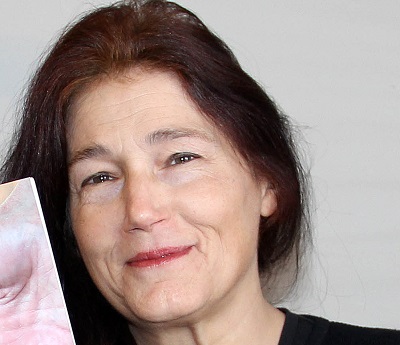
 Laura Rodley, a Pushcart Prize winner, has been nominated for the prize seven times and has also received five Best of the Net nominations. Her recent works include Turn Left at Normal (published by Big Table Publishing Company), Counter Point (published by Prolific Press), and Ribbons and Moths: Poems for Children (published by Kelsay Books). With a talent for capturing the essence of life, Rodley’s writing resonates with readers of all ages. Whether exploring the natural world or delving into human emotions, her words evoke a sense of wonder and connection. https://www.youtube.com/watch?v=PClY8G6HQwk
Just Like That
By Laura Rodley
Marion chopped a hole in the ice, pushed the metal bucket in, pulled it back up. She balanced herself, careful not to slosh water out, trudged up the path to her back door, the first of five buckets, to be ready. Last storm, she’d boiled snow for water. She’d lived without running water before, knew how to do it, she just hadn’t envisioned living without water as part of her future.
Her husband Ted had died, kindly, as he’d always been, sitting in his favorite chair watching Patriots season kickoff, their dog Nestor beside him, no fuss. Wondering why she hadn’t heard cheering, or swearing she entered the room. Ted was sitting up, tilted beer in his hand, staring.
He had not spilled a drop of the beer, she noticed, as she unwrapped his fingers from the bottle.
Just like that, she thought staring at him, thinking of the way Ted used to repeat the joke, “How did Tommy Cooper die? Just like that,” honed from watching the beloved and now long-gone comedian in his youth. When Tommy Cooper died of a heart attack on stage, at first everyone thought it was part of the act, and laughed. Until they learned it was for real. Ted never said the joke again.
Marion stood by Ted’s chair, holding the damp dishcloth in her hand, in suspended animation.
He’d had two heart attacks. Cardiologist had said, you’re doing great: no snow shoveling, keep your cholesterol down. They obeyed. Here he was, dead.
Not your fault, it’s genetic, cardiologist assured, nothing you could do. After the funeral, everyone was so kind. Her friends talked about their trips or children, being kind, always mentioning their husbands. No one truly alone. Widows in her grief group talked about remarrying, looking for someone else.
On television, happy families everywhere she looked.
A bombardment of people having their significant other alive and well, or maybe not well, but alive. Suddenly, their dog Nestor died, also of heart attack. Just like that.
Thanksgiving day, Marion drove into Vermont, declining her sister Trina’s invitation to spend the day with her and her husband. If she had to live alone, she would be alone, dammit, without any ghosts. She noticed a tiny green house nestled against the forest, with a for-sale sign. She stayed overnight at an inn, full of happy families, called the realtor on Friday.
He showed her four rooms downstairs, two bedrooms upstairs. It has a shallow well, the realtor explained. She immediately wrote a deposit check, and sold her house. Trina admonished her, no big decisions after a death, you’re making a mistake. Trina had said the same thing about her marrying Ted, sounding just like her stepmother.
She had appreciated the realtor’s honesty, about the shallow well, but hadn’t expected getting water in buckets from a spring in summer when the gravity-fed well water supply dried up. Nor had she expected it to run out now, water lines frozen, with snow too deep to crawl under the house and blowtorch the line. She had enough money from the house sale to quit her job, pay off both mortgages, and hire help. She could wait. Boil snow. Carry water.
One morning when she saw barefoot prints in the snow by the hole in the pond, she looked around, saw nothing. For four days, she carried food out. She was near the Appalachian trail, figured someone was taking a hiking break. But why barefoot? Trina would say call the police, be afraid. Ted, too. But he wasn’t here. Her cellphone was useless, as there was no cell service. Her landline was out due to yet another power outage. She had stocked up on battery-operated lamps. The house came with a gas stove heater. Already, she had learned to buy ahead.
On the fifth day, she became shivery, cold, her head hot, too much effort to heat water in pans to take a bath. Her stomach revolted. She sparingly poured bucketed water to flush the toilet.
She turned on her battery-operated radio, covered herself, shivered, unaware when the next day arrived. Too feverish to be surprised, footsteps clumped on her doorway, her door creaked open. A tall man with designer stubble touched her forehead, clicked his tongue, brought back a damp washcloth, and a strong cup of tea. “Sit up, take a sip.” Something in his voice said it was alright. “You’re very ill; when you didn’t come to the pond, I knew something was wrong.”
“I don’t know you.”
“Maybe you do. Do you recall a farm commune in Tennessee, where women could have their babies, leave them if they didn’t want them, or hadn’t chosen to have them?”
Marion pushed her black hair back, set her elbow on her pillow.
The man kept talking. “My parents died in a car crash two Septembers ago. Going through their papers, I learned my mother wasn’t my mother, my birth mother. Rather someone named Marion Baker, who’d had left her baby at that commune, but insisted he be put up for adoption, not reside on the commune.”
“It’s you. I always wondered what happened to you. We weren’t allowed to open the adoption papers. I looked for you.”
“The laws changed. It wasn’t hard to find my records, after I had your maiden name. I had a devil of a time finding you, married. Then Theodore’s obituary was published with your maiden name listed. Then I lost you when you sold the house, but looked up deed records. Sorry about Theodore, by the way.”
“I got pregnant on prom night. Raising a baby alone wasn’t done. A book written by the commune’s midwives had a note in the back, ‘if you’re pregnant, alone, come stay with us.’ So I did. No one ever knew. Later, I miscarried five times, never had another child. I always wondered how you were.
“Why didn’t you come talk to me if you knew where I was?”
“To tell you the truth, I was mad at you for leaving me. Then you left food out. Someone who left food out for strangers couldn’t be a bad person, heartless.”
“But why on earth are you barefoot in the snow?” She coughed. He held another sip of tea to her lips.
“It’s a new running shoe. I own the company. I’m researching how the shoes that are shaped to each toe do in the cold.”
“How’re they working out?”
“They are bloody freezing, I haven’t worked out the kinks yet.”
They laughed.
“What’s your name?”
“Tommy. Tommy Cooper.”
“You’re kidding.”
“No…. My Mom and Dad were very fond of a comedian with that name.”
“Just like that,” murmured Marion, closing her eyes, fast asleep.
 The Galway Review