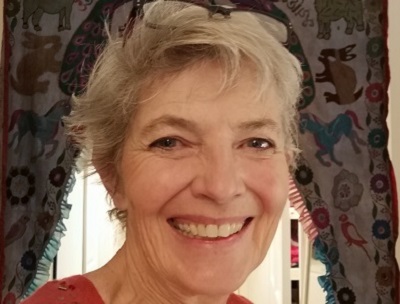
 Lorely Forrester was born in Africa, raised in the Caribbean, studied and worked in London and now lives in Ireland. Editor of Discover Sligo magazine for many years, she has also won a Gold Medal at Bloom. Her poems have appeared in The Galway Review, The High Window, Mediterranean Poetry, Cassandra Voices and elsewhere. In 2024 she won Westival’s Poetry Prize, and was listed for Kilmore Quay’s prize.
Changing Lanes
All spring we walked the quiet, borrowed lanes,
criss-crossing flat lands petering to the shore,
just rush-strewn, time-kept pastures for a mile or
more. We named the lanes after the birds we heard
and sometimes saw, singing in the bare, bleached trees.
Hardy, determined trees, tough as the lives that eased
around them: willows, hawthorn, sycamore and
salt-torn, wind-bowed beech. We marked the sudden
rush of new green leaves, and as the days grew long,
the flush of violets and celandines caught in the
thickening hedge; sun and rain clouds flirting overhead.
Each day we walked the lazy summer lanes,
pausing by broken cottages all sunken-in,
wearing their ivy and wild roses like a second skin;
windows opaque with re-spun webs and dust.
The chair – just glimpsed – still at the fireside,
under the Sacred Heart. But no hearts now, no fire,
the broken crane lies slack, no breath of bread warming
the kitchen air. And up above, where once the slates
had been, a dying ash and alder tree now live, sieving
rainwater softly in. While, glimpsed out back,
the old potato garden, overgrown, surrendered now
to Whins and waist-high crowns of thorns.
Autumn and winter long we walked the lanes,
heads bowed to wind and rain, feet skirmishing with
puddles beckoning the night, chiaroscuro in the
grudging light. Only the last few rosehips gleaming in
the hedge brighten the meagre sight. No valiant plumes
of smoke, no glowing turf, the cottages now stripped
of roses and romance; and with the ebbing days
learned names now slipping from the tongue.
Was this old Annie’s place, or was it Tom’s?
There is no springtime coming to the lanes.
The children of these houses are long gone, their
children too; stepped into lives the old folk never knew,
struggled to understand. Only the letters coming from
another land, telling of safe arrival and a place to stay,
of brighter, newer worlds dawning with every day,
perhaps a visit, when the ducks fall in a row…
But in the cottages along the way, how did their days
dawn then? Maybe with locked-down tears and falsely
cheerful smiles; or shutting-up and blindly carrying on,
pushing against walls that once eased pliantly around
them all but suddenly pressed heavy on the soul.
And always, how to fill that sound-quenched space,
where constant ghosts that time will never age
re-live a looping reel of hoarded yesterdays?
The celandines will bloom along the ditch,
and blackbirds raise their clutches in the trees.
Perhaps the dying ash might live again, but these
small homes that once raised families are now
the dolmens of our everyday, just monuments to time.
No chat or laughter bouncing back and forth,
no arguments; only the mice and fox cubs come and go.
The stones that hold such memories of life and love,
and pain, now scoured by bitter winds
and remorseless rain.
In Memoriam: The older generation left behind when the young emigrated, and their empty cottages now lying abandoned across the West of Ireland.
Curlew
Fiercely I conjure you, yearn your presence, be here,
somewhere, simply eluding me. A slew of seaweed
slung over stones would mask you, or the bones of
shingle. Even the slipway of sand, smoothed by the
hush and return of the sea would disguise you,
you who can disappear by standing still.
Let me just see your stilt-thin, mannequin legs;
your moon-sliver beak, scimitar-sleek, sculpted,
taut as a drawn bow, probing for meat deep
in the silt under your feet. But I am not disguised.
Before my eyes have seen you, you see me and flighty,
you rise; your filigreed, camouflage wings cleaving
the naked sky, revealing the tender white underneath.
And then, high above, I hear your plaintive cry rippling
down over the heath, a luminous stream of sound,
a fluting arc keening through the morning,
whelming my heart in beauty that is a kind of grief.
They say you are a seer, foretelling doom; the storm bird
bringing rain or death or angry, swollen seas.
They say you are the Jeremiah of the skies. I only know
that seeping from your cries I hear despair, I hear the loss
of worlds, a sorrow-laminated prayer for wastes
and wilds and moors that once were yours. A plea for grace,
a space to call your own – the place that once was home.
I hear the pain that time may never come again
when you will breed a living brood that wakes.
The fate you have foretold all down the years is worse
than storm-tossed seas: not just your time cut short
when we have squeezed you out, but what is left –
What will survive you is an aching loss, when high above
these moors and estuaries lie countless reams of blank
and empty skies, unprinted with your shape, unscored
by counterpointed, melancholy cries. Is it too late
to reinvent your world, you new-moon bird?
Who then will voice my nameless inner longing?
Who haunt me with this ancient, wild lament?
Ireland’s native curlews are critically endanagered (population down 97%) through loss of habitat, land fragmentation due to forestry plantations, predation, human traffic and consistent failure to breed successfully. The curlew has always been part of Irish myth, legend and folklore.
Simple Things
Quietly, she offered me the joy of simple things,
taught inscape of the heart, instress of love. Through
her I cede god in the iridescent flash of wings when
small birds fly, his tenets in an eye small as a bead;
in shapes of leaves, intricate and lavish beyond
need; in pools of gold beneath a darkling sky.
Through her the scent of bluebells stops me still, and
shelling peas describes a summer’s day; while lacy
butterflies from half a world away enfold a miracle
within their fragile wings. Her gently easing helpless,
broken strays caught in the fray of strife becomes, for
me, a way of life, a ray of hopefulness and joy for life.
So hands cupped round a small and broken bird, or
heart in need, lost on an unknown way, pleading for
intercession, all speak the telling of the beads; as much
as carmine-coated cherries, bare winter boughs and lapis-
finished swallows speed the heart to follow and to heed.
The wordless language that unites all things came
fluent from her soul, its music, lingering among the
trees (if just the heart can hear it) frees me still. The
finding of a flower hiding in a hedge will lift me from
the edge, re-make me whole. So all the simple ways
she taught me have become the keys that still inscroll
her love, her joy, her creed onto the fabric of my days.
For my mother
 The Galway Review
A lovely read, thanks Lorely!
three more cracking great poems from Lorely. Evocative, powerful and immensely re-readable. Her ability to describe precious happenings in the natural world is a true gift to any lover of natural poetry. But there’s much more,besides. pathos paired with keen observations that cause us to pause and reflect.Layers to unwrap,mull over,savour… Beautiful!