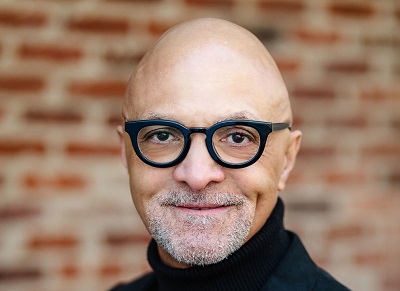
 Howard Fletcher is a freelance journalist, writer, and podcaster based in the Washington metropolitan area. His work explores the intersections of politics, culture, and social justice with a sharp, human-centered lens. He also writes on his Substack, Ninja in the Woodpile, where he offers commentary on the stories shaping American democracy and identity.
A (more) Perfect Twelve
By Howard Fletcher
Raymond and Renee had been friends since fourth grade, when the cafeteria served pizza rectangles and the cool kids flung the pepperoni like shuriken. They’d met under the table—literally—where they both hid, dodging meat missiles while debating which Calvin and Hobbes collection was the best. That survived middle school, high school, and the era when your MySpace song said more than your wardrobe.
The irony of growing up in the ninties is that, eventually, their interests—reading, drawing, tinkering—were rebranded as “culture.” Raymond wrote clean code and cleaner CSS for luxury brands, folding pixels like paper cranes. Renee spun unruly worlds for teenagers and was rewarded with two movie deals and one spectacularly awkward red-carpet encounter with a YouTuber who called her “Ma’am.” Between them, they had a group chat, a rhythm, and a shared habit of quietly backing out of rooms when the volume tilted toward performative laughter.
They watched Marmartha arrive like a weather system.
The ads were everywhere within a week: a glacial-blue syringe gliding through slow-motion air; breathless, bright-eyed people stepping out of run-down apartments into sun-baked courtyards, suddenly glowing, suddenly sleek. “The You You’ve Always Known,” the voiceover cooed. The disclaimers slid past at auctioneer speed. At Walgreens, it was stacked behind the counter like printer ink. At CVS, the pharmacists looked relieved to offer something that people would smile about. The urgent care near Raymond’s condo added a neon sign: SHOTS, NO APPOINTMENT.
There were think pieces, then clapbacks to think pieces, then a minister on talk radio confessing he’d taken it and felt “washed in newness.” A senator called Marmartha “a triumph of the American spirit,” and Thalid Pharma’s stock price leapt like a gazelle. Within eighteen months, the company had become the largest in the world, and its CEO delivered a commencement address wearing mirrored sunglasses. “You are your own final draft,” he said, and the audience roared like he’d cured grief.
Raymond and Renee had a routine—Saturday morning coffee at a bakery that insisted on calling muffins “domes.” They sat by the window like they always had, and watched a city molt.
“Do you feel like extras?” Renee asked.
“Like background actors in the wrong aspect ratio,” Raymond said. “Everyone’s going full IMAX.”
They had both agreed, early on, to wait. Not a moral stand, just a pause. Raymond used the word testing, and Renee used the word longitudinal, and they nodded across the table. They’d survived a few pandemics, several fads, and an era where people drank charcoal. No one could tell them waiting wasn’t a skill.
But the thing about waiting is that it is indistinguishable, on the outside, from not being invited to the party. Their friends were posting before-and-after photos like baptism pictures. Colleagues arrived at meetings shiny and sharpened, like the new version of an app—better and somehow less human. Within months, faces in the grocery store started echoing. It was subtle at first. A jawline here, an echo of nose there. Then came the trend: a narrow face, symmetrical; a kind of doe-eyed, ageless prettiness with skin like frosted glass. You could spot a Marmartha smile from across the street.
At the bakery, the barista’s cheekbones rose like mountains. “You guys should try it,” she said, grinding beans like she was sharpening a blade. “It’s amazing. Like… I look like my inside self.”
Renee smiled at the phrasing and wrote it down. She wrote everything down. “How do you feel?” she asked.
“Like summer vacation,” the barista said, eyes unfocusing. “Every day. No homework.”
Raymond and Renee exchanged a look. They didn’t say it. The word would come later.
They kept noticing things. The laugh at the gym from the Marmartha guys—loud, identical, tipping into a honk. The way the newscaster lingered on specific words as if she’d forgotten where they went. A woman at a crosswalk stepped into traffic because the light was green, but the cars were still moving; she blinked, smiled, and waved as if it were a game. At a dinner party, a screenwriter with heroic abs started a debate about which came first, the dinosaurs or the Roman Empire, and when gently corrected, announced, “Who cares? They’re both old.”
“Maybe he’s joking,” Renee said later.
“He’s the guy who pitched time travel by ‘going really fast around Mount Rushmore,’” Raymond said. “I’m not sure he’s joking.”
There were studies. Then there weren’t. The regulatory agency that ought to have spoken out about clinical trials had been skeletonized under the business-centric President who loved efficiency most when it shaved off oversight. Hearings were scheduled, canceled, rescheduled, and replaced by a roundtable with a Thalid Pharma VP who smiled like a sportscaster and mentioned “mind-body synergy.” Meanwhile, Walgreens started offering a loyalty program: “Every tenth shot is on us.”
“Picture it,” Raymond said once, stirring his coffee hard enough to make a spiral. “You take a drug designed to listen to your idea of yourself. And your idea of yourself is… a magazine.”
“Not even a magazine,” Renee said. “A filter.”
They watched the clones bloom. It was not immediate. People had different internal blueprints, which converged at varying speeds. But by spring, the city was full of nearly the same faces, like God had discovered copy-paste and gotten bored.
“Everyone looks beautiful,” Renee said as they crossed a plaza that had once been full of chess players and was now a parade of matching angels. “And like they’re about to ask me for a hall pass.”
Because that was the other thing. The second thing, which arrived like a dog under the table begging for scraps: people’s edges softened. Their patience thinned. Their arguments simplified, then looped. They bought things in threes. They whispered secrets out loud. One of Renee’s acquaintances, a glamorous editor, started clapping when she made a point, like punctuation. An agent forgot the title of the novel he was selling and laughed until the meeting ended. Thirtysomethings declared “dibs” on vacant seats and called other people “copycat.” At the indie movie theater, Marmartha couples pointed at the screen and said, “I know him!” as if they were at a parade.
Meanwhile, Thalid Pharma released a companion app that let you “refine your vision.” It offered presets: Classic Cherub, Nordic Breeze, Pacific Glow. There were reports of kids borrowing their parents’ phones and adjusting the presets, as if they were building an avatar. The following week, the parents showed up in public with whatever the kids had chosen, and the kids laughed until they hiccuped.
There were calls—lawyers on air, ethicists on podcasts, unslept pediatricians on local news—arguing that Marmartha wasn’t weight loss at all. It was a mirror that lied back so hard it sanded down your brain. Thalid Pharma filed a paper in a paywalled journal insisting that any cognitive shifts were “temporary mood-lightness” caused by the relief of a new self-image. “We are aware,” said their Chief Science Officer in a canned video, “that some people feel younger after Marmartha. We view that as a net positive.”
“I guess it depends on which age,” Raymond said.
They made a game of spotting the chaperones—the not-Marmartha people steering their beautiful adult children. At the bank, a woman explained to a man with the perfect nose why he couldn’t withdraw ten thousand dollars in quarters “because it would be heavy.” At a museum, a Marmartha couple held hands and cried at the sight of a painting of a field, taking turns saying, “It’s so big,” like a revelation. In the grocery store, a sleek man carefully arranged apples until the pyramid toppled, and he applauded.
Renee began keeping a notebook titled Other People’s Summers. She wrote scenes in it: a CEO’s town hall where he announced everyone would be happier working from a ball pit; a city council meeting where three Marmartha parents demanded the playground slides be “less fast because gravity is mean.” She read bits to Raymond over muffins, which they both agreed to call muffins.
He was fine, at first. Better than fine. Raymond had gone through a long, stubborn season of therapy in his twenties, the kind that feels like you’re disassembling a house while still living in it. He’d arrived at a place where he could say, “I like me,” and not wait for permission. He was still husky, a word he’d reclaimed with a grin, the way some people reclaim vintage cars. He had an affection for button-down shirts with tiny polka dots. He cooked stews that took eight hours and smelled like the home they’d both wanted when they were kids.
When the decision came up, he shrugged. “I don’t love needles,” he said, and left it there.
They talked through the issues the way they always did, starting with the big question: should Thalid Pharma keep shipping syringes like T-shirt cannons while the country forgot long division? Renee played both sides, like she did when outlining a book. “Responsibility,” she said, tapping the table. “Where does it live? In the manufacturer? In the State? In the person who says, ‘I want to be a different me, now’?”
“Trick question,” Raymond said. “It lives in a landfill called yes, and.”
They understood why people took it. It wasn’t just vanity; it was relief from the eternal low-grade hum of comparison. It was entering the room and knowing, for once, the light loved you most. The cost was not immediately apparent. The first cost was a subscription. The second was your laugh. The third was your patience with anything that didn’t glitter.
One night, they went to a tapas place with plates the size of coasters. It was full of Marmartha people applauding the paella like it had just cured polio. Their server spoke like a camp counselor explaining the buddy system. “We don’t do substitutions,” he said brightly to a man who was trying to swap his beet salad for something “more chicken-tendery.” “We’re a restaurant, not a wish factory.”
Renee and Raymond watched the man pout.
“I get it,” Raymond said quietly, surprising her. “It would have been nice, when I was thirteen, to walk into a room and not be the kid who people move around. My clothes didn’t fit. My gym teacher called me “big guy,” as if it were a problem he was apologizing for. I still dream about refusing to run laps.”
“You don’t owe anyone the lap,” Renee said.
“It’s not a debt,” he said. “Just an old story I tell myself. Version one-point-oh.”
Later, on the walk home, they watched a group of Marmartha guys kick a rental e-scooter up and down the sidewalk like it was a football. They yelled “Heads up!” without ever looking up. One fell, laughed, and lay there until his friends got bored.
“Everyone’s beautiful,” Renee said, “and we have fewer adults.”
“You write this better than anyone,” Raymond said. “Make it funny. Make it sharp.”
She did. The column she published under a pseudonym went mildly viral: The Year We All Turned Twelve. It contained no moral, no thesis, just scenes like Polaroids. A city of parents. A town of lifeguards with no whistles. She referenced nothing that could get her sued, gave no advice, and ended with a sentence that simply stopped.
The messages that came back were split: half of them “Thank you for saying what I’m afraid to say,” and half of them “Jealousy looks ugly on you.” The latter were often accompanied by selfies with lighting so good she wanted to frame it.
Weeks braided into months, and the world continued to normalize to a single face. HR departments sent around little cheat sheets for managers of Marmartha employees: Use short sentences. Praise often. Don’t ask ‘why’ questions. Thalid Pharma released a line of Booster Bots—Bluetooth-enabled plush toys that nodded and clapped when you pressed their bellies. The ad for them showed a woman in a sunlit kitchen hugging a plush seal that said, “You’re magic!” on loop.
Renee and Raymond kept their appointments with each other. They walked to bookstores, left without buying anything, and went for noodles. They talked about small things—plant stands, a new font, a movie with a spaceship that had better lines than its captain. Sometimes they talked about big things. Sometimes they decided to leave the big things alone.
And then, one Friday—rainy, low-ceilinged—the kind of weather that turns cities into practical jokes—Renee got to the restaurant first. She shook out her umbrella in the vestibule and scanned the room like she always did, picking a table where you could see the door but also escape through the kitchen if necessary. She ordered sparkling water because it made the most boring table look festive. She thought about a line for her next book: All gods begin as ideas and end as mirrors.
Raymond texted: Traffic hell. Two minutes.
She smiled at the phone, then at the hostess, who had the Marmartha face and the focus of a toddler with a bubble wand. The room was mostly clones. They glowed under the dim lights, reflecting each other. A man at the bar tapped his wedding ring on the counter like a metronome.
Raymond slid into the booth with an apology grin she knew well. He smelled like rain and clean cotton. He wore—she frowned—an unfamiliar shirt, a plain black tee under a blazer. He had never been a blazer guy. He usually wore patterns like confetti.
“You look nice,” she said slowly.
He brightened. “You think? I tried three things.” He tugged the blazer lapel, then sat very straight, like his spine was testing a new setting.
“Three?” she said.
“Four,” he corrected, and laughed in a pseudo-normal way. “I almost wore the blue, but the blue made my shoulders look—” He paused, eyes darting downward. “Does this make me look… fat?”
She felt the air tilt. It was not that question—everyone has their version of that question. It was the movement that came with it: he lifted his elbows like a preteen at a mirror, tucked his chin, examined himself from an angle that implied both audience and judge. He bit the inside of his lip.
Something in her stomach went cold.
“Ray,” she said, carefully. “What did you say?”
He picked up the menu and held it too close. “Oh, they changed the font,” he said, bright, breezy. “I hate when they do that. Does this make me look fat?” He laughed again, higher. “I’m joking.”
“You don’t joke like that,” she said.
The server arrived with water and a smile that had eight teeth worth of sincerity. “Have we dined with us before?” he asked, as if this were an amusement park ride. He leaned in to explain the concept of small plates as though inventing arithmetic.
Raymond nodded with the exaggerated focus of someone pretending to listen. When the server left, he leaned across the table on his forearms. “I’ve been thinking,” he said, eyes bright. “About… about not minding things. Like, if I could just… not mind them faster. Therapy took forever. What if I could—” He made a motion, a swoop of his hand, as if wiping fog from a mirror. “Shortcut.”
There was a hole, suddenly, where the rest of his sentence should be. He blinked. “Where was I?”
“Shortcut,” she said. Her voice sounded like it belonged to someone else, further away. “Raymond.”
He smiled. The smile was almost his—a fraction off, like a picture slightly out of frame.
She looked down at his hands. There, under the cuff of his blazer—she had never known him to wear a blazer—a faint stippling of purple on the inside of his elbow. The kind of dots you get when the phlebotomist misses, or when you learn to do something you never thought you’d be doing alone.
Renee felt the restaurant recede until it was only the table, the two glasses, the gloss of the menu, his hands. The hum of voices turned into a single high whine. She thought of fourth grade. Of pizza. Of hiding. Of how friendship is just two people agreeing to be witnesses, to memorize each other before the world edits.
“I’m fine,” he said, unprompted. He pronounced the word like a password. “You should try the octopus. It’s… fun.”
“Fun,” she repeated.
He had a thousand tells, and now he had new ones. She watched them like a burglar watching blueprints. He smoothed his hair. He adjusted his collar. He reached for the water and missed, then laughed at the happy accident. “Oops,” he said, softly, delighted.
The server returned to tell them how many dishes they ought to order “to share, because sharing is caring,” and Renee gripped the edge of the table to avoid drifting.
“Ray,” she said when they were alone again. She made her voice warm, ordinary. “When did you start?”
He tilted his head, curious. “Start what?”
She waited.
“My… new… workout,” he said, finding the words like stepping stones. He beamed, pleased with the sentence. “I’m optimizing. I’m… evolving.” He whispered the last word, reverent, like a magic trick you weren’t supposed to say out loud.
Outside, a bus hissed. The clones at the bar laughed in chorus at a joke that had no punchline. Somewhere behind them, a phone chimed with the default notification sound, and half the room reached for their pockets in unison.
Renee put her hands flat on the table. There was a moral to all of this, she knew, but morals are for endings you can afford. This wasn’t that. This, this thing, was a beginning she recognized and did not want.
“Okay,” she said, and her voice didn’t shake. “Okay.”
Raymond leaned back, satisfied, like a cat that has brought you something it must have worked very hard to catch. “Do I look good?” he asked, and his eyes were huge, expectant, twelve.
The server arrived to take their order. Raymond turned to him instead, eager as a boy with a new backpack. “Hey,” he said, tapping the menu with his finger. “Be honest. Does black make you look… skinny?”
The server’s smile faltered, then snapped back. “You look great,” he said. “Everyone looks great.”
Renee looked at the room—at the mirrored faces, at the summer-vacation eyes—and felt the dread expand behind her ribs, cool and inevitable as tidewater. The city had become a school dance. She could see the chaperones getting tired. She could feel the night stretching on and on.
“Everyone looks great,” the server repeated, like a phrase he’d been taught to say whenever anyone started crying.
Raymond nodded, relieved. “See?” he said to Renee. “It’s working.”
He opened his mouth to say something else—something about ordering, or fonts, or shortcuts—and stopped. His eyes skittered past her shoulder to a mirror on the far wall, caught his own reflection, and he smiled at it, a private, startled delight. He lifted his hand in a slight recognition of his visage.
Renee’s throat parched as she watched him wave back.
 The Galway Review