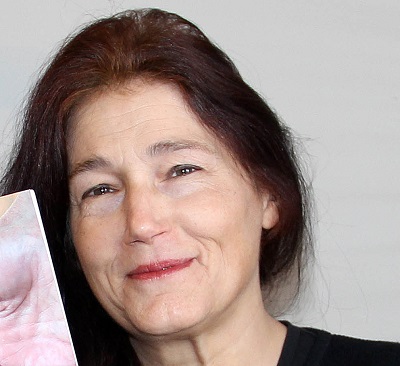
 Laura Rodley, a Pushcart Prize winner, has been nominated for the prize seven times and has also received five Best of the Net nominations. Her recent works include Turn Left at Normal (published by Big Table Publishing Company), Counter Point (published by Prolific Press), and Ribbons and Moths: Poems for Children (published by Kelsay Books). With a talent for capturing the essence of life, Rodley’s writing resonates with readers of all ages. Whether exploring the natural world or delving into human emotions, her words evoke a sense of wonder and connection. https://www.youtube.com/watch?v=PClY8G6HQwk
Diving In
By Laura Rodley
Alma cursed herself as she ran round the wooden cabin, fastening shutters. Not too early for hurricanes, this sure felt eerie enough to be one, more likely a bad thunderstorm- green light in the sky, heavy humidity, air pressure changing so fast her ears hurt. Dark clouds spun across the bayou. She never should have talked herself into coming here. But she had to, it was her grandfather Jerome’s cabin, bequeathed to her. She’d been afraid of the bayou all her life, after falling into its deep waters off a canoe when she was six, staying the summer during her parents’ divorce.
All the stories of the swimming snakes, poisonous enough to turn you purple/black in less than six minutes, ghost of Jean Lafitte roaming the swamps, the pirate who supposedly murdered his slaves to throw into holes where they could guard his buried gold, even after death. She’d hated it, thick fog where you lost your hands stuck out in front of you. She’d never been so scared for such a long stretch of time, she thought, as she yawned the way Jerome had taught her to pop her ears, to relieve pressure.
Jerome had wandered the swamp with her in tow, digging for Lafitte’s buried treasure amidst cypress trees’ strange thick roots, gnarled, and withered like arthritic knees. She admitted to herself that she hoped she would find some of that treasure, but that isn’t why she had come. It was to honor Jerome’s wishes to have his ashes thrown in the waters by his cabin. Singing Cajun songs, she had done just that three days ago, wiping tears against her arm.
Afterwards, Alma had motored his tiny wooden boat to dock in New Orleans, treated herself to dark roasted coffee and beignets at Cafe du Monde, walked along streets before the heat became unbearable. Seven homeless men with mutts, – mainly Australian sheepdog, yellow lab and husky—lay on the sidewalk with the mutts sound asleep beside them. She walked to the police office and inquired where could she adopt a dog. The officer crooked his thumb right—the adopting kennel was beside their building. As she sought an older dog, a black and white spotted puppy thumped his short tail and smiled at her, showing off his perfect tiny teeth.
He didn’t like riding in a cardboard box, or the boat ride back, his cries hidden by the noisy outboard motor. But he liked the yard, the rickety fence, and her. And he was hers, all hers not to be lost like she had recently lost her third baby, a third miscarriage. Alma and her husband had been advised not to try again, or if she did, she would have to remain in bed for the whole of the last five months, again, like she did for the third baby, that she lost anyway. Her husband was tired of her grieving, her tears, her picking up and putting down perfectly knit ensembles that no-one she knew would wear.
The puppy, christened Frostbite, liked to dig. But he waddled back when she called as she cleaned up her grandfather’s cabin. He had kept her grandmama’s clothes, that Alma boxed up too. Three weeks in, she was making headway. The five room cabin hadn’t been cleaned in years. Frostbite refused to come running over to her as she anxiously fastened another screen, another shutter. With his short front legs, he drew up dirt, throwing it to the side near the rickety log fence that had never seen paint, turning his head towards her, then resumed digging. Last shutter fastened, she scolded him as she scurried over, pulled him away from his task. There were six small white eggs, two of them moving. Turtle eggs, she thought. If she left them out here, they would surely drown in the oncoming storm, she thought. How on earth was she going to travel with turtle eggs, a puppy and herself on the boat out of the bayou in a thunderstorm. It had to be done. Holding Frostbite tight in her arms, she rushed inside and stuck him in the shelter’s cardboard box. Already bigger, he barely fit, wiggled furiously as she taped it shut. Grabbing a plastic mixing bowl, she scooped up the wiggling eggs and put them in there. Grabbing a blanket, her coat, a knapsack, the boxed puppy, and bowl, Alma got in the boat, now rocking from green black waves conjured up by the wind, and pulled the handle of the motor line. Nothing, again, nothing. She’d forgotten first law of bayou survival: always fill your gas tanks in town, or bring back filled gas containers.
She unscrewed the gas tank and there was nothing, except rain that had just started falling, watering the tank. Gathering everything up, Alma walked back to the cabin, unlocked the door,
just as the box broke and the puppy leaped out. “I give up,” she said aloud, something she never allowed herself to say.
She sank to the wooden floor and started to cry. Then scritching movement in the plastic bowl made her look up. Two tiny nostrils, then the snout, minuscule length of an alligator, heaved itself out of the papery shell, another, and another; all six hatched. Lightning flashed, rain flumed off the corrugated roof and booming thunder kept Frostbite trembling in her lap. She held him as she turned on the ham radio that many bayou cabins had before all signal would be lost, gave her grandfather’s call letters, Armstrong 3, and asked, “How do you feed an alligator. No, it’s not a joke. How do you feed a freshly hatched baby alligator?”
 The Galway Review