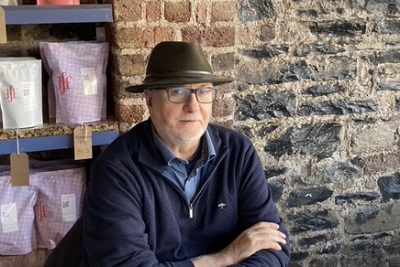
 Gerry Mc Donnell was born and lives in Dublin. He was educated at Trinity College where he edited Icarus literary magazine. He has had six collections of poetry published and a novella. He has also written for stage, radio, television and opera. His writing has been translated into Breton, French, Russian and Romanian. In 2022 a collection of haibun, haiku and senryu, called A Kiss was published by Alba Publishing. His latest book called A Life Reclaimed, is a selection of his writing over the last thirty years, published by Alba Publishing in 2024. He is a member of the Irish Writers Union.
THE FLOOD
By Gerry Mc Donnell
The newspaper headline on a day in December 1954 – Widespread Floods After Great Storm. Great Northern Railway Bridge over Tolka river in Dublin collapses at 3.a.m. Ballybough, once slob lands, small islands, governed by the ebb and flow of the tides, hardest hit, flood waters rushing in on hundreds of residents; furniture floating, banging, in downstairs rooms and hallways; residents rescued in rowing boats. Mr Green refused to go. ‘I’ll stay in the Ark’, he said.
‘What did he say’?
‘I think he said he’ll stay in the park.’
‘Sure the park is swamped! Come on, leave him, we have to get to the three Tynan sisters.’
Mr Green, a Jew, divorced from the Congregation, chose to stay in this neighbourhood where Jews, fleeing from pogroms in Eastern Europe, had first settled; close to the old Jewish cemetery, established outside the city limits, marked by the Tolka river. He tended to some of the graves; what condition are they in now, he wondered? Alone, he practiced some Jewish traditions, such as lighting the menorah, on the eight days of Chanukah. He planted an olive tree, a symbol of peace, with clay-caked finger nails, in his back garden.
Upstairs, looking out his bedroom window, dirty waters rise, swirl around and drown the small olive tree; he turned away in disgust, sitting down on the side of the bed, ruminating on the misfortunes which befell Jews all over the world. Voices! The boat coming back? No, voices of his ancestors, thanking him for tending the graves, warning him against self-pity. ‘It will drown you faster than any flood.’ Some Yiddish words. So the dead are alive? The weight of the flood subsides within him. Looking out on a fully-restored garden; wild berries, fushia for the bees and a thriving olive tree; all submerged in sky blue water.
 The Galway Review