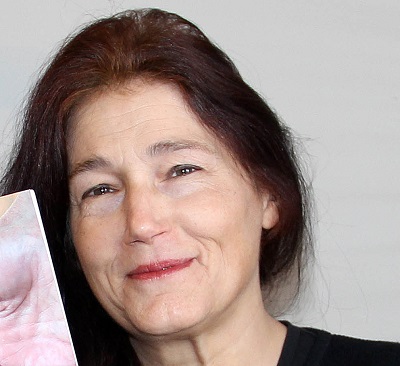
 Laura Rodley, a Pushcart Prize winner, has been nominated for the prize seven times and has also received five Best of the Net nominations. Her recent works include Turn Left at Normal (published by Big Table Publishing Company), Counter Point (published by Prolific Press), and Ribbons and Moths: Poems for Children (published by Kelsay Books). With a talent for capturing the essence of life, Rodley’s writing resonates with readers of all ages. Whether exploring the natural world or delving into human emotions, her words evoke a sense of wonder and connection. https://www.youtube.com/watch?v=PClY8G6HQwk
Wind Drops
By Laura Rodley
The radio was playing his favorite country tunes. Just out of work, night shift at the mill, Bryant was looking forward to a good day’s sleep. Fall was his favorite time of the year—red leaves falling, warm fires, carving pumpkins, fresh apple cider. He reached out his right hand to lift his coffee cup from its holder when whump, his right tire hit something.
He braked, pulled his Honda civic over to the side of the road, corn stalks rustling in the wind, and got out of the car. He didn’t see anything. He walked up and down beside the shallow ditch on each side of the road, and still saw nothing. Ready to give up, he heard a scratching. It was coming from closer to the rows of corn stalks.
He edged closer, pulled a few stalks apart. A tall hawk lay on its side, its feet moving, then it was still. He reached over, felt its chest, heart still beating. When he picked it up, it lay motionless in his arms.
Filled with remorse, he stroked its dark wings, its red tail. It was about twenty inches tall. Its head rolled back in his hands, heart still beating. A red-tailed hawk. Probably hunting mice in the fields, he guessed.
He got back in the car, settled the hawk on his lap, its yellow talons curled and still, and continued his drive home. He would bury it in his yard, prevent creatures ravaging its body when it passed. Still forty-five minutes to go. The hawk did not move, but opened one yellow eye briefly and looked up at him.
At his house, he rushed in, holding the hawk under his thin jacket, passed his own two German Shepherds, telling them firmly to shush, grabbed two dishtowels, lay them on the bottom of a large cardboard box and set the hawk down. Its head flumped to the side on the towels, eyes closed. Its heart was still beating. He felt its wings, didn’t feel any bumps like broken bones. It had a metal leg band with indecipherable letters.
His wife was already out at her job, the kids gone to school. He looked up bird rehabilitators on his cellphone, and started calling. The most famous local one, Ramon Richardson didn’t answer. He’d already read a recent newspaper story that Richardson was beyond capacity already. He left a message anyway. He called another, no answer. The fifth call someone answered. Two of the rehabilitators are on vacation, the rest retired, she told him, I don’t work with hawks, only songbirds. We each have our specialty. Cover the hawk with a towel, keep him warm, make small air holes, close the box. Maybe it will recuperate. Most likely not. Don’t carry it in your lap again, she said, it could slice you with its talons when it feels better. Here’s two other numbers to try. Birds hit their head and their brain gets shook up, but recovery depends on keeping him quiet, she said, and time.
There goes today’s sleep, he said to himself. Hard enough to come by.
He made more coffee, dozed in a chair sitting upright near the bird. He was woken by sound of wings scritching against the cardboard. His dogs barked wildly. “Hush, hush,” he put his fingers to his lips.
He looked at his phone—no one had returned his calls.
He opened the flap of the box and the bird had maneuvered himself to sit upright, steady on his feet, his head tilted, peering up at him with a yellow eye. “Hey fella,” he said. “It’s time to get a move on.”
He picked up his car keys, grabbed the box with both hands, and set it in the car. He drove to the field where he had hit the hawk, deciding to let it go.
He sat the box on the ground by the corn stalks.
His phone buzzed in his pocket.
“Hi, I’m Randy Splicer. I hear you’ve got a hawk. It might be one of mine. Someone or several someones broke into my aviary and released my hawks, harriers, red-tails, and kestrels. It’s a mess. Luckily they didn’t touch my food supply or all the perches, and I’ve another aviary in the back I don’t usually use. Does he have a metal leg band?”
“Can’t read it.”
“Listen, where are you? I’ll stop by, see if he’s one of mine.”
“I’m getting ready to let him go.”
“Could you wait?”
“I hit him with my car but he recovered.”
“That’s fabulous, but even more reason not to release him. There might be something amiss you can’t see. I’ll be right along. What’s your address?”
“On the Seaman’s Road, right by the corn field, first turn off.”
“Run that by me again?”
“There’s a coffee shop, Cooper’s Corner. In Ashton. Know it? I’ll meet you there. In the parking lot.”
“Great. You can come by and see how he does. Much obliged.”
“You better hurry. He’s ready to break out of the box. It’s only cardboard.”
“On my way.”

 The Galway Review