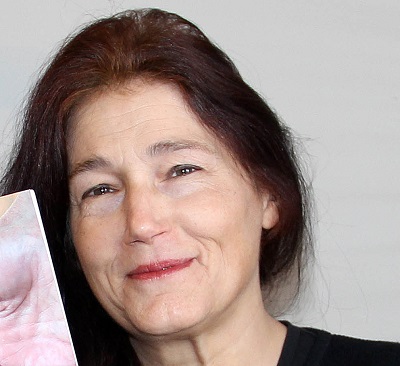
 Laura Rodley, a Pushcart Prize winner, has been nominated for the prize seven times and has also received five Best of the Net nominations. Her recent works include Turn Left at Normal (published by Big Table Publishing Company), Counter Point (published by Prolific Press), and Ribbons and Moths: Poems for Children (published by Kelsay Books). With a talent for capturing the essence of life, Rodley’s writing resonates with readers of all ages. Whether exploring the natural world or delving into human emotions, her words evoke a sense of wonder and connection. https://www.youtube.com/watch?v=PClY8G6HQwk
Workaholic’s Paradise
By Laura Rodley
The barber Luigi cuts hair for many congressmen in town. They get the hot towel, the bay rum, the manicure, the shave with a hot, slick three-inch blade. Sleek haircuts every two weeks. Never windblown or straggly. Congressmen must always be ready for the camera.
Luigi knows this, has always known this. He colors the gray on the temples on his clients, laughs when they tell him, sotto voice, how they had once used shoe polish. Where was Luigi when they needed him?
Luigi started his barbershop by sweeping the black and white tile floors of the very shop he owned now. He bought the place when he was twenty-five—smart move.
His steady manner, large smile, his way of keeping secrets drew many clients. Men who wanted their hair cut a by man’s man came to see him, men who were afraid of the way some hairdressers talked, indiscreetly. With his toned biceps, and sculpted forearms, Luigi exuded alpha male.
Even though it was a barber shop, it had a second work station where women clients could not wait for him to touch their hair when they felt a tingle flow down their spine, as though they were as fragile as a lake frond weaving back and forth receiving exquisite attention. For him to hold his hands hovering by their ears as he looked at them in the mirror, ahhh. Their eyes met as he said, “Good afternoon, Mrs. Dawson,” never distracted. The client laughed, could barely remember how she wanted to coif her hair, staring at his pitch black hair, his dark eyes, his smile, his muscles.
Customers thought it was sweet that he set out a saucer of milk for the stray cats, that he hung an iron horseshoe above his door, so quaint, so New England, set close to the Atlantic as they were.
As Luigi’s business grew, he bought the next door store when the bakery business stagnated. He hired more hairdressers, several bulked up. If anyone preferred someone not quite so brimming with testosterone, they simply chose a different hairdresser from Luigi’s staff, though staff and customer’s alike somehow found their machismo soothing, reassuring, invigorating.
He was building a reputation in politics. In Luigi’s company, the congressmen talked freely, let tips fall from their lips. Flattered that he was so interested, never insisted that he knew more than they, that his opinion was better, or even mattered. For he offered no opinions, just listened. Besides, this was just Luigi. Talking to Luigi was harmless. Luigi keep his cats in the bag.
He even helped some of the congressmen out when two got into a jam over three prostitutes. Once he had bailed out O’Henry when O’Henry was caught with heroin. It was Luigi he called, before his lawyer. Luigi came over with bail money, no questions asked. O’Henry owed him big, O’Henry declared. They shook hands discreetly outside the courthouse.
Luigi was elected into the town’s board of selectmen, with minor campaigning; who had time for campaigning when they worked 24/7? Everyone congratulated him, “Luigi, good job. How’s the wife?”
Luigi smiled, white teeth flashing, his well-maintained body standing solidly in front of the mirror, draping hot towels on the client’s face.
What he kept to himself was that in his far back room, way beyond doors no one knew about, not even his wife, was a gray green metal catalog cabinet purchased from a renovated library, containing alphabetically filed little envelopes with snippets of each customer’s hair.
Dyed hair, black hair, brown hair, blonde hair, gray hair, wiry, straight, soft, coarse hair, cataloged, initials only. Even whiskers from men who were bald.
Never said who’d given him this idea. As a boy, he’d been prone to asthma. As a result, unpopular in sports, he spent a lot of time in the woods, before the town was built up, and lay down on the pine-needled forest floor, watching clouds. It was easier than running away from bullies, even though sometimes he was faster than they, or being touted as a weakling. The day he turned twelve, after one of the older boys tripped him, and others strengthened their fists on his face, he finally found his way to the forest, and collapsed, careful not to fall flat on his face, and lay his sore cheeks against the cool grass. Staring at the ground, something moved. A chipmunk gathering nuts, maybe. But this chipmunk had a brown suit on, no fur, soft soundless moccasins made of orange touch-me-not blossoms, a hat made of an acorn cap. He squealed when he saw Luigi watching him, pulled leaves of tall green comfrey with purple hanging bells over him like an umbrella. “Don’t go away,” Luigi whispered.
The tiny man peered out, with big blue eyes, pale as the sky that Luigi had spent so much time on his back studying. “How can ye see me, yer not supposed to be able to see me.”
Luigi shrugged, which made him cough.
“Sheesh, kid, ye really got beat, hunh,” the tiny man said.
No answer.
“Sorry if I offended ye, me lad, forget me manners. I’m Manfred, by the bye.”
The little man sneezed and appeared right in front of Luigi’s battered face, suspended in air by tiny luminescent wings that sparkled with rainbows in the sudden soft rain that soothed Luigi’s face, mounted on a tiny flying winged horse.
“Why’d they pick on ye, lad? Forget I asked, I know the answer, old as the beginning of time, and beyond. Bullies have been around since before the earth was born, before Gods were being made. Listen, kid, to keep bullies away ye got to be smarter than them, always one up, always have something they want that they can’t have, something ye do that is better than them. Plus, ye got to find someway to channel their negative power—for negativity is a power, don’t let anyone say it t’isn’t. Ye got to get hold of them by the hairs of their chinny chin chin, better yet, from their head.”
He explained how power can be channeled through hair. Even by finding two strands off the bully’s head, he could command them, or, direct them. “But it must not be to damage them, lad. Just throw them off, giving the illusion that you could smear them.”
Manfred rubbed his long hands together in glee just thinking about it. “But illusion only, mind. Ye cannae do damage, just keep them off ye. Grow your own power; take their hair and they cannot damage ye.
“Ye can ask them to take care of ye, do good for ye. But never the other. Ye cannot summon the other, for bad things, worse than one hundred bullies will be waiting for ye. Cause and effect, ye see, cause and effect.”
Luigi listened as Manfred, a tiny wizened man the caramel color of ripe acorns, explained he was a woodland fairy. Manfred instructed him how to gather the hair, blow on it to negate negativity from the other person, and proceed in safety.
Luigi pushed himself off the forest floor, and went home, to the distress of his mother who wailed at the state of his face.
The next day, Luigi waited in the alley lined with brick walls between two stores where the bullies usually waited for him, but he was early, an old fairy trick Manfred taught him. When Lucius, the thick chested bully with acne scars charged Luigi, it was in fast motion, not in slow motion the way he had imagined it. Luigi scrambled on top of the brick wall, grabbed hold of Lucius’s red hair, and pulled, trying to get two hairs. Lucius yelped, striking up with his fists, his bully buddies fast behind him.
“You are doomed,” yelled Luigi into Lucius’s hair, and wrenched his fist up, full of red hairs. “You are next,” he screeched like a dragon, kicking out, and falling off the brick wall into their path.
He didn’t see Manfred and a contingent of fairies hold him up in the air with pulses of white light who set him back on the top of the wall, but he did see the other five bullies start pinwheeling their arms backwards, and yelping, flattened, then, scrabbling to their feet, screeching, running, Lucius staring back at him in terror, then tripping flat on his face, running along close to the ground like a frog.
Hysterical laughter bubbled up as the fairy contingent circled him, riding tiny winged horses, blue light sparkling on their iridescent wings. “Great job, Luigi, fantastic!”
Manfred was holding his belly, laughing so hard,“Stupendous lad. That should keep them off ye. If not, come find me. But you mustn’t strive to be as violent as we were. Extreme measures for an extreme situation. They won’t remember seeing us a’tall, but they’ll remember you. Keep that fellow’s hair, mind, like I telt ye, remember what I said.”
Wheezing, his hands on his knees, Luigi nodded.
Next day, no one was waiting for him at the alley, no one waiting at the other side of the many brick walls he passed on his way back home. He spun on fast legs to the forest to thank Manfred.
“Manfred,’ he hissed, mindful to always lower his voice around fairies.
“Oh laddie, I hate to tell ye, I confess I’m feart to tell ye, but I’m called home. We were too fierce yesterday, something we’ve been warned aboot; doesn’t do if we’re instructed to teach ye kindness. I guarded this forest, but now it’s up to ye. I so wanted to see ye take on all the bad guys, as ye grew up—believe me, there will be many—but I’ve been summoned. Remember not to use your power for negativity, promise me.”
“I promise. Where are you, I can’t see you.”
Manfred appeared from under the comfrey, his left eye bulging, black and blue, his fairy horse hanging his head, his mane straggly, wings droopy. “We’re sore damaged, Luigi, but we’ll be alright. It was great fun, and I thank ye for dat. We waited to say goodbye, see ya.” With that, Manfred and his fairy horse spun in a circle of creamy light and vanished.
As Manfred had instructed him to discreetly leave out a saucer of milk for the fairies and iron for protection against bad fairies, Luigi did not forget. If people thought he had a soft spot for cats, he would not dissuade them.
He worked hard, kept people employed through hard times, did as much as possible under his own steam. When years later he saw Lucius panhandling in front of the supermarket with a cardboard sign, “Hungry hungry hobo,” skinny, face scabbed, strung out on heroin, he contacted a customer who worked in drug rehab and anonymously paid for a stint in rehab, twice. It didn’t take. Perhaps Lucius’s addiction opened him up to continuous negativity so any goodness directed towards him leaked out.
Hoping to secure his next election, Luigi went to his cataloged hair cabinet. He drew out single strands of hair from various envelopes. A one-inch strand, a two-inch strand, and so on. Didn’t take much to be effective. He twirled them together strand by strand until he had a little rope. He covered this rope with dark blue velvet and wore it around his waist every day until election day. Took it off only to shower, washing it carefully in Woolite. He won.
When seated in his barber chair, the congressmen praised themselves: “You had good teachers, beginners’ luck, hah! Good luck, Luigi, here’s a three dollar tip. How is little Paul, your son?”
Luigi was only thirty-five. The congressmen were older. They did not worry.
In town, people hailed,“Hi Luigi, hi Marie, hi Paul” as his family entered church every Sunday.
He always had his smile, his captivating hello.
He bought two more salons in neighboring towns.
He swept the hair from these shops too. His staff thought Luigi never forgets he was one of us, he sweeps the floor, does manual labor. They didn’t notice that he did not drop the hair clumps into the metal trashcans painted red and salmon to match the décor. He pushed the swept hair into a dustpan, then into his office. There he checked the day book, cataloged the hair, and filed it away in his main office. What hair he could not identify, he kept a curl of that, used it too when he felt it necessary.
Luigi’s fame grew. Statesmen came from other states, waited weeks for a haircut. Luigi was ultra busy, but never too busy to set out saucers of milk whenever he was in residence at one of his salons, or barbershop. Never too busy to remember Manfred and his fairy steed.
Now he’s trying for a seat in the Senate. He has hairs in his catalog cabinet from people you’ve all heard of. The thing is, he is trying to steer them all towards something good, something positive, sometimes against their nature.
 The Galway Review