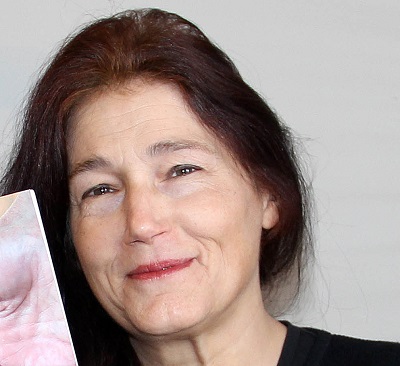
 Laura Rodley, a Pushcart Prize winner, has been nominated for the prize seven times and has also received five Best of the Net nominations. Her recent works include Turn Left at Normal (published by Big Table Publishing Company), Counter Point (published by Prolific Press), and Ribbons and Moths: Poems for Children (published by Kelsay Books). With a talent for capturing the essence of life, Rodley’s writing resonates with readers of all ages. Whether exploring the natural world or delving into human emotions, her words evoke a sense of wonder and connection. https://www.youtube.com/watch?v=PClY8G6HQwk
Quitting Time
By Laura Rodley
I know you shouldn’t go kayaking alone but today, I’m so stressed out and hot, I stacked my Old Town kayak atop my car, strapped it down with bungee cords and drove to the Millers River parking lot, scooted the kayak down the trail ahead of me, holding on, since it’s steep, let the kayak slip into the water. Wearing boat shoes, climbing in isn’t so hard here. I unstrapped my bungee-corded oar, and let the river carry me south. Humidity has drained me, impossible to feel cool even in air-conditioning, fielding calls at the vet’s office.
The kayak and I sped along as the air temperature dropped, 100 degrees to maybe 90, a warning sign but I ignored it. Just too hot. The temperature’s always cool riverside, but this signaled storm. I knew I should turn back but didn’t. Then I heard thunder. OK. I knew where to pull over onto the bank by the bridge that lets people access the old part of town. The waves started picking up, and the level II river became a level IV, just like that.
The waves fought me as I paddled, aiming to hit the bank within ten minutes. The wind whooshed, and a tree fell blocking the thruway arch at the bottom of the bridge. My shoulders hurt as I fought with the wind and waves, but I made the bank, now muddy, digging my oar into the rocks for purchase, which you’re not supposed to do, and broke the oar. The kayak whipped around, waves smacking it. I pulled my legs out of it, and jumped out, as waves grabbed the kayak and smacked it into the wedged tree, crumbled. I crouched down against the wind, edged closer to inspect the damage.
Rocks were being scalloped out by the waves in the exposed ball of roots at the base of the huge maple, tumbling around, ten feet from where my kayak had smacked its nose into the debris. Then I noticed the rocks had fur! Beavers? No strange wide tails… Fisherman had widened the bank’s edge, sitting on their chairs here for years, so I edged closer to the root ball sticking out the water.
Little eyes scrinched up, tiny webbed toes. Otters, five of them, ten feet away from me, water tearing mud away from the bottom of the root ball stuck in the water, as they scrambled away from certain drowning. Big as my hand. I tore off my life jacket, stuck my feet in the water as little stones and sticks tore at my legs and picked up the little balls and folded them into my jacket.
They didn’t like it. One leaped out and fell in, then another. Carrying three, water sluicing down, I walked along the road, got in my car and turned it on. I’d been so hot and rattled I had left my keys in the ignition. Holding the bundle close, I drove two miles home, rain smashing across my windows.
I opened my life jacket and set it in an empty dog crate. Two otters scrambled down. I got blankets, heated some milk. Upon my return, one was lying very still. Not breathing. Another one, then the next one shuddered. I picked them up, held them in my fleecy towel, hoping to revive them, rocked in my chair. Twenty minutes later, movement. A little head peeked out. I sang to him and his eyes closed as he fell asleep. I set him in the crate to remove the others but it scooched out and climbed up my leg. Luckily I’d been wearing river gear and thick jeans to guard against the sun and rocks so he didn’t hurt me.
I spooned tuna into a bowl and he hated it. I reheated the milk, dipped my finger in, offered it, and he lapped it off. I had to change or I’d get sick. He followed me into the bathroom, then my room.
I picked him, curled him in my arms, and lay down on my bed. Thinking I better put him in the dog crate, I fell asleep.
I called the vet when I awoke. Dr. Ralph recommended puppy milk replacer, Esbilac, opened the office so I come get some immediately, he’d dispose of the others. Benefits of small town living. Named Oscar, he grew fast, followed me room-to-room, was welcomed at work. Because of rabies’ risk, he was inoculated. He tolerated being handled by me, but was sedated beforehand so he wouldn’t scratch anyone while he got his shots. Serendipitously, I’d already been innoculated since I worked in the office.
Three months later, and three feet long, he scooted outside and came back muddy from jaunts. Sometimes he brought me a fish or toad.
Caramel colored, and highly visible in his scarlet harness, people heard about my otter. Everything was fine.
Then he brought me a large orange Koi. from whose pond I wondered. An angry Jules Brand stormed into the vet’s office, yelled, “I saw that creature steal my Koi!” Oscar huddled under the desk against my leg.
I asked, “Don’t you have wire over your Koi pond to keep raccoons away?”
Then Oscar scrambled onto the counter and hissed at him opening his mouth wide, fangs visible, his milk teeth only just fallen out. He’d never done that before. I was unwilling to pick him up in this mode.
“I want restitution.”
“You’ll get it.”
Afterwards Dr. Ralph said, “Meredith, Oscar’s a wild animal. You knew this time would come. Catching fish is one thing. Being aggressive, another. You’ll have to release him or put him down. One or the other, immediately. Otter bites are highly infectious. And you’ll have to ask Dr. Justin to take care of it, I’ve grown too fond of Oscar.”
“He didn’t bite him. He was protecting me.”
“We’ve talked about this.”
I put on my coat, attached Oscar’s lead to his harness, and set him in the car. He loved car rides. I drove to the bridge in Millers Falls, walked to the end of the dock, set Oscar down, took his harness off, tears dripping down my face, stroked his back in one long stroke. I looked around to see if anyone was watching, then dropped him in with a splash. He looked at me, surprised, then lay on his back in the water and smiled the way otters do.
Crying all the way home, I put on the tea kettle and rocked in my chair.
I cried myself to sleep. Then a wet body, squeaking to be petted, pushed its nose against me.
I drove further, next day, to an Orange town pier. He’d never find me here, dropped him in, ran to the car.
The next morning, someone knocked. “Reporter Norman Ryan. Want to do a story on you, and Oscar.”
“He’s been released.”
Then Oscar pushed his head in through the door, muddy, squeaking. Norman snapped pictures of Oscar holding toys, eating fish, filed the story.
The next morning, as I settled him in the car to drive even further to release him, another stranger drove up. “Miss Mitchell? I’m Howard Smythe, Washington Zoo. We read about Oscar online and we’d like to offer him a permanent home. Here’s my credentials.
“We’d also like to offer you a position as his handler, as well as work with other animals. You obviously have the gift. What do you think?”
 The Galway Review