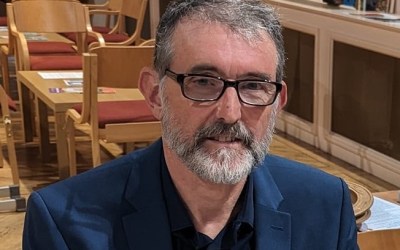
 Andrew Murray Scott is a distinguished Scots author, celebrated for his novels like “Tumulus,” “Estuary Blue,” and “The Big J.” Alongside ten non-fiction books, including compelling biographies, his works have been published, reprinted, and self-published, showcasing his versatile approach to writing. Andrew’s literary journey includes winning the Dundee Book Prize in 1999 for his debut novel, a milestone he modestly acknowledges. Beyond writing, he has contributed to journalism, media lecturing, and press officer roles. Andrew’s short stories have graced esteemed publications and anthologies such as New Writing Scotland and Gutter, earning him recognition in Scotland and beyond. Explore more of Andrew Murray Scott’s literary world on his website at http://www.andrewmurrayscott.scot.
Greater Love Hath No Man
By Andrew Murray Scott
He would have been twenty-five now, my brave wee boy. Time goes by so fast, six years and still I think of him as if he had just gone, and every time I do this crossing, every few months, over to the mainland, I think of him and the senseless waste and feel the weight of my loss. I stare at the glow of sunshine striking the water, hear the whistle blast, hear engines throwing out steam or smoke. But all I can think is I’m going to see my boy.
The water is flat calm today, Darren, you’d have wanted to go out bodyboarding in the bay. That’s hard to think. All the things you won’t do. Your whole life ahead of you. Senseless it is. I don’t know if Eilish feels it quite as deeply as I do, being the mother, but working in the big city she keeps herself busy, no time to brood, with her job and promotion. Probably she does, she tried as hard as me to change his mind then she turned away and stopped talking to him before he went off. Why didn’t he listen to us? He went his own way. We don’t speak about it, about Darren, when we talk on the phone. Not every week now, sometimes twice in a month, sometimes just once. She’s so busy of course. It’s an open wound, still raw, though years have gone by. It’s no less pointless, senseless, shocking. And such a braw blue day makes it seem even worse, if that’s possible. The sky is perfect, a still day, windless, the ferry just backing out of the dock now into the sound. In fifteen minutes, I’ll be able to see that spire thing on top of the hill at the cemetery above the town.
The war dead. As if that makes it sound better than just ‘the dead’. They love their memorials, don’t they, the British army? Every dead soldier another tick on the glory roll. But he’s mine, not just another ‘name of deceased member of service personnel’. That’s how they define him now. He was my boy for nineteen years, theirs for less than two. And they had it in the records and in all the papers that he was twenty. He was two months short of his twentieth. They did that deliberately, in my opinion, to make it look better. It was no casual clerical error. They didn’t want to admit they’d killed a teenager because it made them look bad.
‘Just like his great grandfather,’ Uncle Billy said at the funeral. And I hadn’t known that before. It turned out he’s been killed there too, my great grandfather on my dad’s side, Matthew McAllan, near Lashkar Gah in the Second Afghan War in 1879. Only a hundred miles from Sangin. Which makes it worse. Like history repeating itself. Uncle Billy showed me a photograph of him, in his uniform kilt, dark blue-green with yellow lines and a white pith helmet, the bagpipes over his shoulder, those white puttees over his boots. It was hard to make out his features between the helmet brim and his full beard. Pipe-Sergeant McAllan. Uncle Billy never met him of course and doesn’t know where his grave is. All he has is the military record. If I’d known about it, I could have told Darren, used that, I mean, to try to persuade him. A war of empire that was of course. Same difference. They’ve been at it forever, the British Army. The establishment that ruled half the world can’t accept that we’re a tiny island with diminishing global influence. They want to be out there boasting like we’re still a world player. So, one hundred and thirty-two years later, our family suffers again.
I feel the vibrations through the deck that tells me the boat has stopped backing and is slowly turning round to face the mainland, engines churning at the stern. There’s not many going over, I notice, no-one I know. The traffic at this time of year is mainly the other way, tourists. After all I’d told him and Eilish. I brought them up as proud Scots not British. And I was so pleased when he joined the Young Scottish Nationalist group at his school, all the brightest boys and girls, the ones going to Uni or the Technical College. He had a future and he was thinking about it. I had brought them up to think for themselves. And he was a sensible lad, not like those tearaways, joyriders and the ones hanging around the bus stops or causing trouble in the cafes in the town centre on a Saturday night who looked like they’d been sniffing the glue, getting in fights. He was never one of those. That made it worse. How many of the lads who went over there came from that kind of background where they didn’t have the chances or the options Darren had? But he still couldn’t see it. It was so unlike him. They were lovely kids, easy, dutiful, caring and maybe that was because I was on my own. It was a struggle but they made it easy. Everyone said I was so lucky, the teachers… given that his father had walked away when they were so young. He was only six and his sister four and I watched them so carefully to see if their father’s reckless attitude and casual violence had left a hidden legacy in them but there was no sign. He’d disappeared from their lives without leaving any bad memories. I was lucky about that. And they took my side, even though I tried to make him sound like a better man, a better father than he was. He was a waste of space of course and I’ve no idea where’s he got to, even if he’s still alive. I don’t keep in touch with any of them. And then Darren started talking about the war in Iraq, he’d been studying it at school. That was just after he’d gone up to the big school, a year after, 2003 that was, I think. We talked about it. He seemed to agree it was a bad idea for Britain to invade. I’m sure he thought the protests were a good idea too. But he had misgivings, feelings about the ordinary people there living under the Saddam regime. I told him about the empire and what it was about and how it was all unravelling and tried to get him to see this was just the same thing again; foreign interference, that would make things worse.
He was glued to the TV when the Iraq War started, when the Scud missiles started flying. Instead of regretting it, he seemed excited by it. And he had this daft idea that the Scots were there with their own flags even though he knew it was just that same old British Army thing about giving the Scots their own identity so they would more willingly be cannon-fodder. That’s been going on since the days of the Jacobites, I told him. The best way to neutralise the Scots is to harness their military pride in service of Britain, the empire, whatever. It’s a perversion of our real identity. They use the symbols of Scottishness so that we will more readily invade some other country. So that Scottish pride is contained within the Union bloody flag. I thought he’d got that point; that our future should be free from colonial-type wars. I know he shared my views on nuclear weapons. That scared him. But he just wouldn’t see that the two things were joined together. He said he knew I’d be angry – which is why he hadn’t told me right away. That hurt. That he hadn’t wanted to tell me so that I would prevent him… was I really so hard on him? Oh, Darren, why didn’t you listen?
We’re in mid-channel now, and I can see the mainland rising, the whites of the houses and the green hill behind. Every time I come, I have this argument with myself, the guilt comes back, and the rage too, though it’s too late for all that. They offered me a trip over to see where… the military liaison officer did, and that’s when I knew for certain they’d been checking up on me. They already knew my political views. That’s why they’d sent a woman. And a Scots woman too. To try to get me onside to be a good army mother, to go along with their glorifying and exonerating themselves from any culpability. But if you start a war and you send soldiers over there to fight who else is to blame if some of the soldiers get killed? And she kept repeating how ‘grateful’ they were for his excellent service. Grateful? They were more grateful that I was, that was the message they seemed to be giving out. Or trying to make it seem like I was not ‘grateful’ enough, that his service was being denigrated by me and all the time what they were really worried about was that I was going to demand an investigation, or make a complaint or kick up some fuss in the media. Later, the same woman came again. Knocking on my door to hand in his service medal. I had to sign for it! I wasn’t going to let her in I was so flustered but I had to. And she went on and on about it; the outer beige stripes represent the scorched landscape of Afghanistan she said. And on and on. And the Queen’s head is on it: FID DEF ELIZABETH GRATIA REGINA. Operation bloody Herrick.
Later, I got an official letter with all the detail of how Darren had died, the date and time and the location. It was near a checkpoint and two men with him had been wounded, one seriously. An IED of course. And with the letter was an article explaining what an IED was. A plastic water bottle with a nine-volt battery taped to it. Duracell, that bloody pink grinning rabbit from the adverts, and some wires and a plastic clothes peg! That’s all it was. That’s what killed my boy. KIA, that army phrase; killed in action. And they were very eager to tell me he had died instantly. They said he had stepped right onto it and taken the whole blast… So he had died to save his friends, in army-speak, at least. Just like him… careless…
And the worst thing was Cameron announced the withdrawal weeks after Darren died. Just weeks, so what was it all for? It was a stupid campaign. There was never a clear strategy. All mixed-up but they think people are too daft to know that. There were projects to improve agriculture to try to wean the farmers off growing opium at the same time as they were doing huge assaults against the insurgents as they called them, and at the same time they were trying to reconstruct the country. It was like they didn’t understand that the insurgents and their supporters and the farmers and the politicians in Kabul were all one and the same. Then Karzai admitted he’d been in talks with the enemy, the Taleban.
And who were the Taleban? Just the native Afghans that’s who. They were not insurgents; they lived there. Just like the Vietnamese in Vietnam. I know nothing about war but that was clear to me from watching the news reports. And when you’ve a son out there you do nothing else: You watch news on all channels, you can’t help yourself. It’s not true there were bad Afghans and good Afghans, just Afghans and not many of them wanted us there at all, except the tribal leaders who were getting funds and offers of political power. Sometimes they fought against us, other times, in the rainy seasons they stayed home. And the Taleban had support at all levels, even from those funded by the US and ISAF, even within the government, even within the police. In fact, some policemen later shot the soldiers they had been working with. Some of those who joined the Afghan National Army did the same; some had only joined the ANA to do that!
And my son was in the middle of it. My wee boy. He was so thin when he went off, still a boy. He was a boy. He was nineteen and taller than me but he was a child really. Too trusting, not wise about the cruel ways of the world. He thought everything was black and white; good guys or bad guys. He was one of the youngest in the regiment, he told me, with pride. It turned out there was a boy only eighteen. Boys. But he loved the camaraderie. He did. He told me many times. It was best just to listen then. He was out there and I tried not to upset him or show the true extent of my fear for him, and for me and Eilish. She couldn’t bear to think of it, trembled every time there was a news update. And soldiers were killed. In 2009, the year before he joined, before he went to Fallingbostel, one hundred and nine British soldiers had been killed and that was in the south of Helmand province and things intensified the next year too with a major offensive against Marjah. Oh yes, I know all the names and places, know what Camp Bastion looked like, that the perimeter walls stretched for miles, that the place was the size of Reading, that the airfield had a runway more than two miles long with up to six hundred flights a day. You learn these things and never forget them. And the heat was in the mid-forties and it was an alcohol-free zone. I remember it all. I can remember the day they announced Osama Bin Laden has been killed in the mountains and I thought then: Does this mean the war is over? Because it all started with that, Al-Qaida and they were long gone. The Taleban were just their on-off supporters, not the original enemy, really just the native Afghans, so it was the same enemy that Matthew McAllan had faced. Or their great grandfathers at least.
But Darren was more interested in silly things; he was keen to get into the regimental shinty team and he seemed more annoyed about the tartan changing. The Gordon tartan kilts the regiment had worn for centuries I think had just been replaced by what he called a ‘tea-towel’ of green and blue, which was called the Government 1A Pattern Tartan. He didn’t like it. He went on and on about it. But it was too hot to be wearing kilts out there anyway. He had always been fussy about his clothes; things had to be just so. In his first phone call when he arrived at Kandahar he told me about them all marching out with full kit as the pipes played them to the RAF Hercules at Hanover airport. And he was full of the bullshit that the military gives out, the lightweight comments, glibness that has replaced the stiff upper lip. I remember him saying: ‘We’re lucky mum, because the lads here before us, were 2 Scots and the Scots Guards before them… we’re carrying on their good work… it’s all Scots out here, mum, loads of saltires, you’d love to see it…’
Heartbreaking, to hear the words of my son in my memory coming back at me like that, no wonder I get emotional. I can hear it, not just remember it, you hear it, the voice, the crackles on the line, the light-heartedness of him, as if it was just last week. Then his second call, two weeks later. I was just in the door, rushed to the phone and he was there. I’d been frantic but you couldn’t text or email because their phones had been taken away. The Taleban had been monitoring the networks and mobiles were a security risk. The last time he’d called, he was weak from the heat and kept talking about it. I think he had had enough of it by then, sounded exhausted. It seemed to me he had changed his mind or was wishing he had never gone. I don’t like to think of that last call. I could hardly hear him like he was fading away but that was a fault on the line. Then he had to go. And that was the last time. And I wished I had taped those calls. Other relatives and wives do that. I should have. And Eilish wasn’t here, she didn’t even speak to him. We worried. We watched the news, we got emails from the regiment, but these were bland and filled with cheery nonsense, nothing military or important.
We’re docking at the pier now, gliding in to the line of rubber tyres suspended from the dock. It seems less bright here, dull. I look back at the island. I’ll be going back in just under two hours. I sometimes wish I didn’t have to come over. I only come really for Darren. I put in a monthly grocery order online and they deliver. I’ve no need to come for any other reason. I walk down the gangway onto the pier. I know the way, up to the High Street, past the Post Office, to the Property shop and round the side onto the path that goes up the hill to the church.
It’s a steep climb through bushes, on an earthen path through brambles nearly ripe. I can see the island from here, across the Sound, five miles it is, and there’s a smell… sweet Cecily I think, very pleasant though it’s a weed but so are thistles. It’s a Commonwealth Grave as well of course, but Darren’s over by the tall monument, with fallen comrades from both world wars and a Private Edward Matheson killed in Iraq in 2004. And I bend down to read his name every time as if somehow it might have disappeared since the last time I was here. Private Darren McKerchar, 4 Scots Highlanders.
Took me two years to get the name added to the memorial. His grave is nearby. He had two funerals; one at Brize Norton, when his coffin was covered in a Union flag along with two others and the family one here. There was a picture in the paper but I refused to have any flags or military uniforms at that. He was my son, not a cause of glorification. I couldn’t stop him going but I didn’t agree with it. And there was no way I was going to condone or exonerate those who had been responsible for it.
There’s a bench by the church door and I can see his stone and look over to the island. It does look brighter over there, has its one patch of sunlight. Darren is here. And I shall keep coming until I am too old to come. It’s all I have left to do.
END
 The Galway Review