 Dr. Jorgji Kote, born in Tirana, Albania, is a distinguished diplomat, educator, and author. A graduate of Tirana University in English & American Language & Literature and Industrial Economy, he further honed his skills through specialized training at institutions like Vienna Economic University and Nebraska University, USA. Beginning as an educator, Dr. Kote transitioned into key governmental roles, including consultancy for IMF and World Bank. His diplomatic journey encompasses positions from Minister Counselor in Brussels to Deputy Ambassador in Berlin. In 2022, he was honored as a “Grand Master” in diplomacy by Albania’s President. Fluent in multiple languages, he has authored over 500 articles and six books, emphasizing diplomatic developments and international relations.
Preface by Kate Holman – British-Belgian journalist
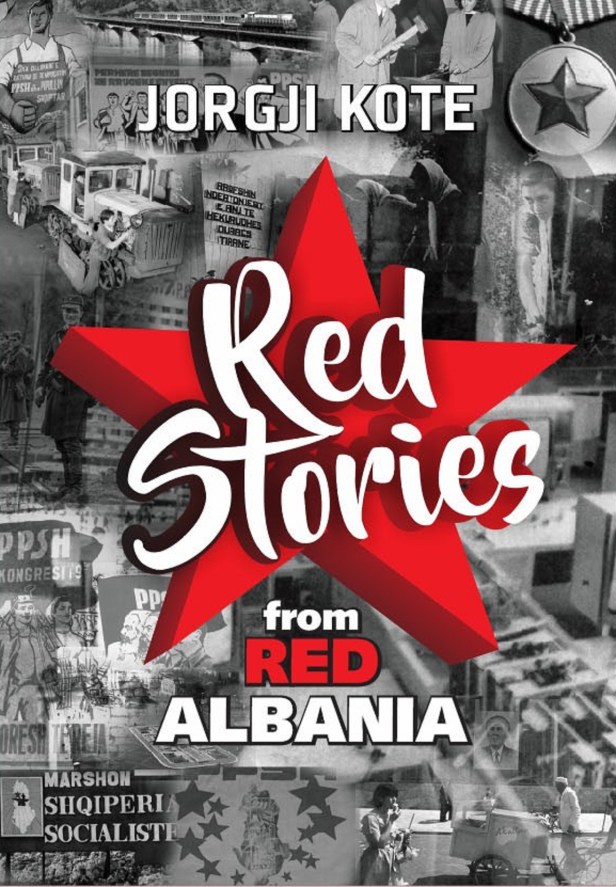
Dr Jorgji Kote’s account in this book of life in ‘red Albania’ is an intriguing insight into another world, which nonetheless existed so nearby, so recently. He tells his stories with characteristic humour and little trace of bitterness, which nevertheless cannot disguise the hardship of those days.
Since it came into being more than a century ago, Albania has faced more than its share of challenges. Jorgji has lived through some of the most turbulent times, and his career as youth activist, teacher, interpreter, civil servant and diplomat brought him into contact with many influential personalities. These True Stories from Red Albania reflect personal experiences, and illustrate vividly how a resourceful population drew on the strength of families and communities to confront formidable problems. At the same time, they comprise a historical record offering foreign readers a better understanding of the country, and young Albanians an insight into the tribulations of earlier generations. Yet Jorgji’s perspective is always constructive and hopeful, and this bodes well for the future.
Like millions of Europeans, in the 1970s and 1980s I knew nothing about Albania. I had visited China in 1979 when the borders were still closed to independent travellers, but then everyone had heard of Mao Tse Tung and his Red Army. Albania seemed infinitely more distant and mysterious, more unfathomable and intimidating.
In the 1990s came images of boats crossing the Adriatic and Ionian Seas, overflowing with thousands of desperate asylum-seekers – images that seemed more reminiscent of what we knew then as ‘the third world’ than of Europe.
And my knowledge of the country might have stopped there, had it not been for Brussels’ remarkable Albanian residents. A chance encounter, and I was hooked, astonished to discover that the community has existed here in Belgium since 1956, now numbers tens of thousands, and its members can be found in all walks of life. And yet everything Albanian still seemed so exotic, so dangerously foreign.
The sudden realisation 10 years ago that the country is, in fact, quite close and easily accessible, was like a bolt from the blue. Could I visit Albania? Yes, why ever not?!
In 2006 I took the plunge, with two close Calabrian friends. They were charmed, not only by magical Berat, the vertiginous descent from Llogara, Gjirokastra’s graceful Hotel Kalemi with its unique Ottoman room, swimming in Ksamili … but also by the best coffee outside southern Italy!
I had an ally. My cousin Sir Patrick Fairweather was British Ambassador in Rome when the regime collapsed, and was closely involved in setting up the British Embassy in Tirana. He fell in love with Albania, and for many years was a dedicated Director of the Butrint Foundation, receiving the Naim Frashëri medal for services to Albanian culture.
With his encouragement I arranged travel, car hire and hotels with surprising ease. It was a weird experience to walk along the promenade in Saranda and watch a film presentation about Butrint, featuring my cousin! When I visited the archaeological site again some years later, I was received by a young, enthusiastic female archaeologist. Albanians like her are now safeguarding the future of this world-renowned treasure – and that is as it should be.
In Jale, in 2006, I first realised how badly the international media misrepresented Albania and its people at that time. It was logical that I, as a journalist, should try to tell the truth. On my return to Brussels this led me into deeper research and a broadening network of Albanian friends, culminating in Genti Metaj’s invitation to get involved in the Konitza cultural association, which I accepted with pleasure. Since then, it has been a privilege to take part in many events organised at the Embassy by Albania’s official representatives in Brussels, and as a result to get to know Jorgji Kote.
In 1905, George Santayana famously wrote that “Those who cannot remember the past are condemned to repeat it”. Now Albania is in a new phase, with its place in Europe universally acknowledged, and its decision-makers will need to learn from past mistakes and make wise choices in order to steer the country towards a positive future. It is poised to open accession talks with the EU, and proud to see its young people looking outwards and forging their own lives across Europe and the rest of the world. But wherever they go, as Jorgji illustrates, Albania’s strong identity, language and culture will bind them proudly together throughout their lives.
 The Galway Review