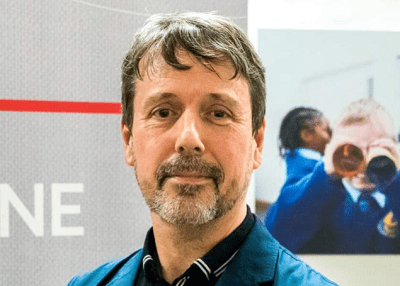
 Rory Duffy’s work has been published in the journals Southword, Crannog, Riptide, Ropes, Bath Anthology (UK), Riptide (UK), Skylight 47, Boyne Berries, The Cormorant, Howl & Martello. Shortlisted in all the major short story awards in Ireland including, RTE Short Story Award (twice), Bryan McMahon, Sean O’Faolain & Cuirt amongst others. He also writes poetry.
Helter-Skelter
By Rory Duffy
I’m thinking about education, about how our minds fill up with the world, how each of us differs as a result of the filling. I think of my own past, my filling up. Was there froth or was it flat? There are two moments from my childhood that are now of great importance to the filling up of me, two moments when I felt a surge of electrical life flowing through every nerve in me. Two moments when I thought, this is it, this is being alive. The first was a moment when my fingers released a new shape and form into the world, the second involved my exposure to a sound. I didn’t recognize it then but my subsequent experiences of the educational sciences and especially the psychology of education, released me from a tether of thought that had kept me running in an arc of limitation for most of my life.
The first incident occurred in primary school where the teacher placed a formless lump of clay onto a board in front of me. She said I could make whatever I wanted. I was offered freedom, limitless possibilities and an openness that was never to re-appear in my education. While others made flat starfish and twisting snakes, dull leaves and uniform suns, I teased and touched and twisted the glutinous lump until my small hands had formed a shape, a whole new thing. I had allowed the thing to become itself, to be. There was no plan, no image jumping out before I started, no pre-set internal wiring that included repeating something that I thought should be made out of the clay. I had, without thinking, made a new thing. The thing had evolved as my hands made random movements with the supple material. I made something without knowing beforehand what it was. It was a helter-skelter. Its phallic shape was complete with twisting ramp and tumbling clay balls. The thing on the board in front of me moved and twisted and had taken on its own form of life. It had a breath and beat and soon the other children in that room turned their heads to the movement and fun occurring on the desk in front of me. Within minutes they had destroyed their starfish and snakes, mangled their leaves and suns. They copied my antics, the room slowly morphing, becoming full of movement, smiles and stippled colour. I saw real magic coming out of the ends of my own hands that day and it made me smile a deep warm smile inside, this birth and metamorphosis under the gaze of some internal Prometheus.
The second moment wasn’t anything to do with my fingers or hands. It was a moment deep in my ear. It occurred in the back room of a pub in Doolin in 1971, my parents chatting on holiday voices, me wandering Tayto-handed to the place where the strange noise was forming. As I wandered around the cavernous dark back rooms that made up that place, there in the corner under the smoke and smell of beer coated carpet, sat the piper. I had never seen such a thing before. I had never heard such a sound before. Obviously I knew what music was, my mother had the radio on all day when I was too young for school. I had Dione Warwick walking on by as the Kinks followed their fashion. Also, I had witnessed my brothers shushing me on a Thursday night as the theme music to Top Of The Pops careered around our 1960’s living room. This was different though. As I watched, his great farmer’s hands and elbows squeezed the air from the strange instrument. His dexterous work made the sound spiral out into the world like nothing I had ever heard. The sound had form, not just sound and those notes formed shapes in some other plane, they looked to me like the ever decreasing twist of unfolding fern heads. It was like I was falling down into a repeating pattern of light emptiness. The energy flew from the pipes lying across his lap, the instrument encasing him in a silver bubble of sound and movement. I remember how the sounds used up all of the capacity in my brain as they tumbled across the air and into me. They required a lot of concentration and attention but they worked, the uneven numbers all added up to a beautiful even number by the end of each part. In amongst the dancing melody notes that fitted so elegantly together I heard another noise, a sound low and rumbling. It sat snuggled in behind the melodic, dancing notes, squat and bulbous. The sound coming from the strange instrument was the drone and I stood wide eyed as the low frequency waves cut into my brain. I looked around and decided that most of the beings in the room were hearing something else. They had headphones of pre-occupation on their beery heads. The dance and chirping patterns of the melody was holding them, keeping them from knowing the whole truth. Their feet and knees marched along with each melodic note and beat. They knew the tune alright, or so they thought. They filtered out the drones though, how else could they not be wide eyed.
In the air of that room I heard something I would much later realise was embedded in my DNA, was a part of me and the almost forgotten family of my past. I would later discover that the hands of my grand-uncle, my grandfather’s brother, were the hands of a master piper who died tragically in 1917. I would later learn how this close relative would tease just these notes from chanters and drones as well as the curling necks of fiddles. It occurs to me now that my grandfather was also in my DNA as a builder of walls, a man who took odd shaped stones and pieced them together to make a smooth surface of a wall, the same as the notes forming a smooth surface from jagged fragments. These moments tie us into the Fibonacci sequence that is this unfurling of life, this clay slowly taking up form.
So what’s this got to do with education?
“I’m a believer,” the Monkeys once said, “I couldn’t leave her if I tried.”
I probably heard that on one of those Top Of The Pops Thursdays. Micky Dolenz was of course talking about love, I on the other hand wish to discuss belief systems and their consequences. What I mean when I say I’m A Believer is that we fall in love with static systems, the systems that surround us each day. We fall head over heels for the norms of our current social constructs. Our hearts get a fixation, a fetish on the fixed. How else are we to learn? How else will we fit in? We know nothing else. There really isn’t an alternative when you’re three days, three months or three years old. Our parents and guardians show us the sign posts, they point the way, they inform us of the rights and wrongs. Our brains soak it all up like little vascular sponges. Developmental scientists tell us how the brain carries out a very large percentage of its development in those first few years. The bit after those years is just the rounding off of the jagged edges, the removing of greasy thumb marks. These social constructs become the beat to our internal rhythm, the invisible clock by which we run. Get up at this time, go to bed at this time, drive your car at this speed, become this person, get that job. In effect we are exposed to a program which will become fixed and unmovable, a program that will determine which person we will become. We, as children, don’t get to choose whether to use Windows or IOS, Linux or Android. We don’t even know that there’s a choice. We just get a system program and we get taught how to use it. Those programs that lie underneath everything, over time and well supervised repetition, become our fixed social constructs. They become our norms. This way we become accustomed to “norms” and if you become a believer, which we all do, then these norms become fixed early and cannot be changed (they are after all norms).
So, what is my point, what am I trying to get at here? Let me explain. An acquaintance on a course I was doing recently made a comment that brought the whole norms concept home to me. When I said how I was never really able to concentrate in school and as a consequence also found it difficult to read books (without locking myself away in total silence that is – I do read books), she made the comment that what I had described sounded to her like attention deficit disorder. She didn’t really think about what she was saying, no one who actually thought about what they are saying would issue such a label in such a passing manner (a label of any kind should be arrived at by mutual agreement and discussion). It just came out. It was a normal sentence to issue within the constructs as they are. That sentence on its own is a piece of evidence to show the domination of the norms idea.
The comment was accepted by me and I smiled my best pandemic Zoom smile, the one I have on auto for people who make comments about my attention or behaviour that get to me but that I don’t want to show externally that they get to me. I am not even sure that it does get to the surface me, maybe it leaches away down into my psyche without being noticed. Either way, this event reminded me of a previous encounter, one that also questioned my internal program and its perceived deficits and deviations from the norms. Some time ago I met an old school class mate while out in town Christmas shopping. We chatted about our school days and couldn’t help but to drift into the outcomes of the others in our various school classes. We also briefly discussed their characters to see who had gone up, so to speak, and who had gone down. Crude tools of measurement were applied such as model of car and size of house (there were also accompanying non-verbal comments to get to the real truth of the character without using words or comments). I chugged along with the conversation as I was programmed to do from so many years of having just such conversations and not wanting to offend people by pulling them up in their judgemental and narrow criteria in measurement of such things (it would after all be exhausting to do this). Soon my classmate reminded me of my own external persona from his point of view.
“You never really concentrated in school though, did you,” he said.
I passively agreed, with some short acknowledgement like, “agh yeah” or a nod of my head. I stood there with bags of presents for my children and I agreed with what this other human being thought of me in school. I acknowledged his norms and how his opinion of me in school didn’t meet with his norms. We said our goodbyes and moved off into the chaos of pre-Christmas town centres. Afterwards I realised that this passivity is part of my Pavlovian training to accept that not concentrating in school is the problem. School is the norm and the act of not concentrating while in that environment causes a ripple in the fabric of the norms. What does this mean, this rippling of the norms? The answer is clearly in the question. If you are not in compliance with the norms then you must be, logically, outside of the norms. You must be the opposite of these norms. Now, when we look up the opposite or normal there are quite a few words that are used for the opposite of it. When you look up the antonyms of normal in any good dictionary you are hit with a barrage of negativity, especially when these are applied to a vulnerable young human being trying to grow and find their place in a society. Abnormal, different, disorderly, extreme, irrational, odd and strange appear in the thesaurus. But they are mild. The section also includes most shockingly, unbalanced and insane. Insane!
So there it is. There is the secret message within the program of norms we choose to allow to dominate our system. And when I say our system I refer especially to that in the Irish educational system and its supports within the community.
Back to the boy with the lump of formless clay and the Uillean piper’s drone. His moments of importance were based around creativity and an emerging awareness of the natural world and the complex structures that exist in that world. That boy experienced both of those things while being educated at a small catholic school in the midlands of England (a consequence of my parents having to migrate to England for work, no doubt because of the norms of that time too). The real issues became apparent when that boy moved back to Ireland and was placed into the draconian system that existed here at that time, that is where the real conflict with norms began to take place.
In nineteen seventy-two we moved back to Ireland and in that September I was sent to the local national school. It was near where we lived and I would be able to walk to school, an almost fairy tale idea for the family that moved back to the old country from their Sassenach exile. The school was not what it appeared though, I suspect that lots of schools were not what they appeared at that time. I was about to witness a thing that I feel is not talked about enough today, another dark shadow on our past. I witnessed the establishment of the norms in that place at that time. I had never seen a boy beaten with a stick before. I had never seen a large man beat a boy with a fist before. I had never seen a boy beat another boy before. Previously school playtime for me involved playing tag or seeing who could jump the farthest. I was shocked, very shocked. Playtime became a survival time, a time to measure and watch each and every other child to see if I could spot the attack before it occurred. It was exhausting. My antenna was on at number ten, my eyes twisting to see behind me at every turn. I discovered having my back to the wall of the veranda shelters was one of the best defences from flying kicks into the small of the back. This position left me static however, another weakness in that field of battle. My asthma became bad soon after. My lungs squeezed tight and refused to let the correct amount of air creep in. I was shocked by the depravity that was visited upon each and every one of the children I shared a classroom with. The norms of violence were rained down on us in much the same manner as the skies rained their excess energy down onto us each day of term time. I felt like I was the only one who thought that it was an abomination. It was an abomination. The silence around this scandal makes me fear that our societies viewpoint on this is also a reflection on the damage done with those norms, the systems so intrinsically internalised by the victims of it, that they cannot, we cannot, clearly see the negative energy flowing through that societal structure. I was lucky. I could see how abnormal it was. Funny to think that in order to describe that system I have to use the same words I found earlier as the opposite of normal. It was in reality, insane. I was both cursed and blessed with awareness. My early school experiences gave me a view of another system of education, one where the fist and cane didn’t rule, where beatings and violence were not mechanisms employed to motivate a young child, where exploration led to internalisation and manipulation of information, to analysis and memory construction. The war was between cognitivism, constructivism and Pavlovian behaviourism. Pavlov was standing tall and threatening at the front of the Irish boys school classrooms.
To help to orientate the reader to the kind of behaviours I am referring to here I think it best to give an example, to place a marker firmly into the mud of this part of my life, this part of the lives of many people of my age (late fifties). In the first week or two back in school in September all of the children within the walls of that institution were involved in a large litter pick exercise organised by the local council. No doubt it was a program to help educate all of us litter-throwing delinquents on how to place our rubbish into the burned out bins on the local estate. It was a day that saw all of the children of the school running around and picking up litter in the flat complex and its surrounding open spaces that sat opposite and that dominated the school. In the early September sunshine, we grabbed Blackjack wrappers, Tayto bags and flattened twenty Major boxes. We happily competed to get the most litter and to take it over to the tractor-trailer that the council officials had provided. They were standing next to the trailer while we dumped our happy handfuls into its stomach. Statements like “Good man. Well done. Sure, aren’t ye great lads altogether,” were issued from the large handed, brown skinned men who worked the rubbish of our town. We kicked and galloped like new foals, the sun on our backs, no walls around us.
After an hour the job was done. We were corralled back inside to get on with the memory singing of fifth class. Seven sevens are forty-nine. Blessed are the meek. The Barrow, the Nore and the Suir. Trim, Navan and Kells. After about half an hour a knock came on the classroom door. This usually meant that the principal was coming to remove a child for a beating in the corridor or his grandmother had suddenly passed away. Neither of these events occurred this day. The door opened and two men in suit jackets walked in. They carried big boxes of Emerald sweets, the kind that sweet shops kept behind the counter and that got weighed out when buying. Our ten-year-old eyes opened wide as we all saw the swag that the men carried under their arms. With the ceremony of a major announcement, they informed us that our good work had earned each of us five toffees each. Great cries and whoops erupted from us at the thoughts of such rewards and the break from the hum of a normal classroom day. One of the men held the box while the other dealt out the toffee gold. Things in my new school were looking up, I thought. The men moved down the tight rows placing the five sweets in front of each boy. In turn each boy started to quickly unwrap the first of his sweets and the class soon became a room of boys chewing hard on Emeralds, trying to get to that sweet spot where the toffee is soft but the sweet is still full. We chomped and chatted as the men in suits passed a few moments with the teacher, no doubt congratulating him of the fine class of lads he had in front of him. Smiles were exchanged and burbling mouth-full chat was had. As I placed my third sweet into my mouth the men said their goodbyes and we all mumbled a big thank-you to them. The door closed and the men marched off down the corridor and out of the building. It was at this time that we noticed a dark cloud cross the face of our teacher. Pavlov appeared over his shoulder and poked him sharply in the ribs. His eyes turned black and the spittle between his lips stretched across his open mouth. These were not good signs and I felt like I was in a boat on a lake with a huge storm appearing a short distance from me, I fumbled for the oars.
“Right lads,” came the roar.
“Ye know the rule about eating sweets in class!”
With that he took to beating the children in the front seats. One slap for each sweet gone. I was stunned at what I was seeing. He was swiping down his stick onto the open palms of the boys at the front. Tears were flowing but whimpers were kept inside, the fear of further beating keeping the sounds in. This was an atrocity; it was our own childhood Bloody Sunday. I managed to get one sweet out of my mouth and into the wrapper in such a way as it looked like I had only eaten two. I was slapped with the short, sellotape encrusted cane twice for my mortal sin. My ten-year-old hand was held out, just like I had learned from watching the other boys do when complying with the norms in that room. The large man took his bamboo beating stick and struck me twice across the open palm. I had never been beaten before, violence had never paid a visit to me. The cane made a noise as it travelled through the air, a lightning flash of pain as it made contact with the soft skin on my young hands. I sat down and placed my hand around the cast iron frame of the two-person desk, as all the boys did. I cried silently and got my book open on the right page. In the background the teacher huffed and puffed at the physical strain at having to carry out such a huge task of social engineering, whimpers of pain accompanying the noise of the cane moving through the air. There were over thirty children in that class. The beating must have lasted several minutes. We watched all the different responses and face shapes of our classmates as the pain arrived into their ten-year-old nervous systems. My young brain took it all in. I imagine my neurons stored this information much like the people who witnessed Bloody Sunday stored their information. It took up residence deep down inside us and became a norm for us in our society.
This level of barbarism continued over the next few years and I got to witness and feel the pain of this control many more times before I finished my schooling. I soon decided that this was wrong and that I wouldn’t do what these people told me to do, why would I? That optimistic little boy with the red wellingtons and home knitted jumper got moved from the perfect column on a list somewhere, to the fucked-up, won’t-do-what-you-want-me-to-do column. Right up until fifth year in secondary school, I both witnessed and felt the pain and suffering that these large handed, tweed jacketed men rained down upon me and my classmates. On another memorable occasion, the All-Ireland amateur boxing champion teacher decided to beat me around the head with his clenched fists, this would be a particularly low point for me, a particular wound that would never, to this day, heal. It occurred in second year of secondary school. I had a small radio in my bag with one of those old off-white single ear phones plugged into it. While rummaging in my bag the earphone came out of its socket. The radio had, unbeknownst to me, been left switched on. The radio noise blasted through the class. My maths teacher stood behind me in disbelief that such an event could occur in his class. How could such insolence and disrespect occur in his classroom? He beat me repeatedly around the head with his clenched fists, screaming like a banshee at what had happened. I felt myself leave myself for a moment as the room began to spin. I didn’t fall from my chair but I was nearly knocked unconscious. I regained myself after a moment but definitely suffered some kind of injury. The worst part for me was that the teacher had far worse behaviour going on in his classroom but some of the boys were big and might fight back. This is where I learned of the psychological phenomenon that is labelled “Projection.” He beat me with the energy he had saved up to beat those others, I was easy. He was a bully. He knew he could do it to me, much as the Paedophile seeks out the vulnerable child. My asthma got worse. I didn’t tell my parents what was going on, being of the belief that they had enough to deal with without me adding to their lot, again, probably part of the hidden curriculum that was being sold to us each day. I missed a lot of school with my chest as tight as the ropes around a boxing ring. Several class test result sheets had blank spaces as the hierarchical structure tried to step on my inner head. I was not having it. I was not going to recognise the Kangaroo courts that happened every day within those walls. Many nights I cried in bed at the thoughts of the beatings I would get from both teachers and pupils the next day. The pupil beatings and torture were really awful as well but I at least understood that they were repeating the behaviours that were Norms within the adult led class where our learning was to occur. I have decided not to recount any of the punishments and beatings dealt out to me by the other pupils as I believe that they were not in their right minds in such an environment and it would only reinforce the system to attach any blame to them. It is no coincidence that a lot of members of my class ended up as low achievers and many developed problem behaviours. What other way would they be?
I went on to work in factories and other manual jobs over the next ten years before realising that his was not what I wanted and that those men with the sticks and big hands would win if I did what their hierarchical system wanted me to do. It became clear to me that their system had to produce failures as well as successes. How else do you get success stories if you don’t have failure stories. That’s the thing about hierarchies, that’s the thing about social constructivism, you need layers. You can’t have it even as that would be socialism and god knows, we don’t want any of that. We don’t want those on whose shoulders we need to stand to see over the fence to get wind of the fact that they too are a required output of the system. If you require proof of any of this just stand outside a local courthouse on any day of the week and note the black BMW’s parked across the road. The cars of the successful outputs of the system. The local Guards placing little yellow cones to stop anyone else parking in those consecrated spaces meant only for those who have done well. Look again and you’ll see the opposite outputs of the system, the other end of this constructivist spectrum. Look and you’ll see, they’ll be entering the court on some sort of charge, often to do with them taking something that doesn’t belong to them or carrying out a behaviour that isn’t acceptable to our society. Funny that. A system that is about providing one group with access to the required resources and denying the other group access to those resources. When the other group take those resources we punish them and in so doing, we reward the successful group via monetary gain and social status. A Trevelyan system at work in our state, the shadow of colonialism written all over it, great tattoos of slave systems on those strong arms, a society constructed by the few, for the few. I’m no revolutionary but I do believe that the most powerful tool in the hierarchical constructivists toolbox is that of the Hidden Curriculum, that unsaid set of rules that are hidden in all of the underbelly of the education system and often goes largely unrecognised by even those that work within that system.
I got lucky. I got to go home to a reasonably stable house, a home without the inherited angst that trickled down through those exposed to that system, a house with some rationalism present. This kept me alive, kept me going. It has taken me forty years to figure out a lot of this stuff and to develop the skills to be able to express it. It’s a real pity that the boy who formed that clay and heard those sounds skewing the air didn’t get to do it earlier. It’s also a real pity that the whole generation that experienced that kind of thing don’t appear to have a voice, to vent their angst towards this episode in our society’s development. But isn’t that just it, isn’t that the sad part? The victims are disempowered, they have their trigger fingers removed, they turn the negative energy back in on themselves. Look around you and your society and you can see them, they’re everywhere. I’m one, you’re one. I suppose that I’m a believer after all, just not in that system. I’m a believer in the best in people, the potential that is in all of us, no matter what background or perceived ability or disability we all have. And as for Pavlov, well he can just go and fuck himself!
 The Galway Review
Fabulous writing. Thanks for sharing. I’ll share it on twitter-X