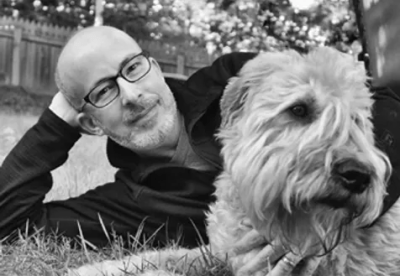
Gary J. Whitehead‘s fourth collection of poems, Strange What Rises, was published by Terrapin Books in 2019. His third collection, A Glossary of Chickens, was selected for the Princeton Series of Contemporary Poets and published by Princeton University Press in 2013. Previous books include Measuring Cubits while the Thunder Claps and The Velocity of Dust. He has also authored three chapbooks of poetry, two of which were winners of national competitions. His writing awards include, among others, a New York Foundation for the Arts Fellowship, the Pearl Hogrefe Fellowship at Iowa State University, and the PEN Northwest Margery Davis Boyden Wilderness Writing Residency Award. His poems have been featured on Poetry Daily, Verse Daily, the Writer’s Almanac, Ted Kooser’s American Life in Poetry, the Guardian’s Poem of the Week, and the BBC’s Words and Music program. He has also been awarded the Princeton University Distinguished Secondary School Teaching Award. His poems have appeared widely, most notably in The New Yorker. He lives in northern New Jersey and teaches English at Tenafly High School. He was selected for Bergen County Teacher of the Year for 2023-2024.
The Direction They Were Headed
By Gary J. Whitehead
It was late and snowing hard, everything darkening, the spruces along either side of the road barely visible now. The snow flying at them in the headlights’ glow made Donner think of hyperspace in a sci-fi movie he could no longer name. The wipers kept time like a metronome, though no song came to mind, and on the driver’s side the black blade had formed a ridge of blue ice that had become a cold worry he couldn’t have reached through the window if he tried to.
“Hey, boss, I don’t know,” Javier said and then blew on his hands.
Donner could see through his periphery that Jav was trembling a little when he pushed the power button on the radio. “I told you, it’s broken, Javelina,” he said, turning to him, “and no matter how much you push that shit, it’s not going to start. It’s been dead a long time.”
“I don’t know,” Jav said again. He took out his phone but that was dead, too.
“What don’t you know?”
“I don’t know we’re going to make it,” Jav said. “This storm is some serious shit.”
It had been Donner’s idea to attempt the drive from Grants Pass to Galice to install the furnace at the Three Rivers Inn, and when he’d left at six it was dark and snowing and he hadn’t had time to check the forecast on his phone because he’d had to pick up Jav in Starvation Heights, then swing back to his garage so they could both lift the furnace into the bed of his pickup and strap it down and cover it with a camo tarp. Ordinarily it was a half-hour drive, maybe forty minutes, to Galice but now it was—he looked at his G-Shock—half past nine, just as dark as when they’d left, and snowing hard.
“It’s snowing hard, boss,” Jav said, as if reading Donner’s mind.
Even with four-wheel drive, the truck was slipping in the deep drifts and Donner could no longer make out the shoulder of the road, just the dark, looming spruce trees on either side of it. He eased up on the gas pedal and cursed himself for not putting on the chains. The wind whistled and, yes, it was snowing hard.
“Should we turn around? Go back? Try again tomorrow?” Jav said.
Jav had been working for Donner since the summer. At the interview, both of them wearing those god-awful masks, Donner had given Jav a hard time about not having a high school diploma, but after the first job, when he saw that Jav could sweat copper, he’d let it drop. Jav, not yet thirty, lived with a friend in a trailer in Starvation Heights. He sent half his earnings to his mother in Phoenix, and talked often of how he couldn’t wait for the day when she and Jav’s sister’s two kids could come join him in the West. For whatever reason, Jav had no significant other. His sister had died while in police custody a few years prior and the case had stalled in the courts. Jav was forever calling his mother, asking about the case, telling the kids he loved them and would see them soon. Donner felt bad, but it was an abstraction, nothing more, like hearing of someone who’d died from the virus, and he seldom asked Jav about what had happened to his sister or about the obstacles keeping Jav’s mother and his niece and nephew from coming west. Back in August, on a boiling hot day, Jav had been climbing into an attic for a job on an air conditioner, and when his shirt rode up his back, Donner, who was holding the ladder, had seen a scar that looked like a stab wound. He’d said nothing, but now Donner thought of it and how bad they’d both smelled that day, and how he’d realized as he looked at Jav’s sweaty, scarred back that no matter who was the boss and who wasn’t, who was white and who was black, at the end of a hot day in August, you both smelled ripe. He hadn’t ever asked Jav about that scar on his back, but his toes curled at the thought of being knifed in the back.
“We’re about half-way there. Maybe it’ll let up,” Donner said, though now he didn’t know, and his own phone when he tried it had no reception.
“Okay, boss,” Jav said. “But I don’t know.”
Donner reached into a waxed paper bag and pinched at the last crumbs of a coffee cake, but there was nothing to chew on, just a taste of sugar and cinnamon.
“Boss!” Jav called out, holding onto the dash.
A white station wagon slid past, inches from his window, and Donner felt his heart thudding in his chest. “Jesus H. Christ,” he said. He peered through the windshield, which was smeared now with ice though he had the defroster on high. A spruce bough bashed the passenger window and Jav flinched. Donner pressed the brake and felt the truck losing control. It spun, slid backward, and he felt the rear end dip and the front end lift as the truck came to a whiplashing stop.
They were in a ditch.
“I knew it, man! I knew this shit!” Jav said.
“Take it easy. You okay?” Donner said. He rubbed at his neck, peered through the smeared windshield, saw spruce boughs. The engine was still running and he pressed the gas. The truck lurched and slid farther back. They were stuck.
“I hate this snow,” Jav said. “We gonna die in this shit. Try calling 911.”
“Take it easy,” Donner said. He took his phone from its holster. “No service. Maybe a text will go through. I’ll text Tanya.” Tanya was his daughter. She lived in Portland with her wife—the term always made Donner wince—and Tanya and Donner texted every other week or so, talked on birthdays, saw each other on holidays or when she made a trip to the arts center on the coast. Their visits were awkward at best, a cheap dinner out somewhere, Donner inevitably pumping Tanya about her mother, Angela, and Angela’s new husband Pete, who had his own insurance company in Bend. But Tanya was patient with Donner’s failures. She’d pat his hand and tell him she loved him and, when he rolled his eyes at her lifestyle, she’d tell him to get with the times. Tanya was a printmaker. In other words, Donner liked to say, she’s fucking broke. With his big thumbs, he typed a message—“Stranded in snowstorm on road to Galice call police pls”—and pressed Send. The blue line grew, grew, grew, stopped. “No signal,” he said. “Let’s wait a bit and see if a car passes.”
“How much gas you got?” Jav said, peering at the gauge.
“Quarter tank. We’re fine. If it lets up, I can try hiking up to a higher elevation, see if I can get a signal, and call for a tow.” He looked at Jav’s thin boots. “You could wait here.” He watched the snow melt against the arc of the windshield, blurred with ice and blue wiper fluid. In the hush, he could hear the wind, the wipers, the heater, Jav’s left boot tapping at the all-weather mat. It might have been nice if his own feet weren’t so cold and if the white drift of worry weren’t so deep in him already.
“You heard of the Donner Party?” Jav said.
“What?”
“The Donner Party. My moms told me about them when I told her your name.”
The phrase rang a bell that ended a class way back in middle school. Donner smiled. “Refresh my memory.”
Jav licked his lips, rubbed his right eye. He had a dime-sized spot on his left cheek where his skin was pink. His eyes had a yellow tinge. “They were pioneers back in the day. Before all this was settled. She said they wanted to go west, like me. Maybe like you? Or were you always from here?”
“Born and bred here, Javelina.”
“Well, they drove in wagons. On the Oregon Trail, a long-ass path all the way to Cali.”
It was starting to sound familiar. Maybe he’d read about it in a history book once. “Hold on,” Donner said, shutting off the wipers. “Is that a car?” Nothing but wind then. He blew the horn and Jav jumped.
“Shit. That scared me,” Jav said.
If a car had passed, Donner didn’t see it, didn’t hear it. He turned the wipers back on, and now the twin arcs had shrunk where new ice had formed, like two closing eyes. “Go on,” he said. “Tell me about the Donner Party.”
His white teeth chattering a bit, Jav gave a forced laugh. “They were pioneers. You know. Free land. Living the dream. They packed their shit and headed west with a bunch of others, rolling along the trail in their Conestoga wagons—”
“Like the seltzer.”
“What?”
“The sparkling water. Conestoga.”
“Right on. But the way my moms tells it, it all went to shit. Families fought, cattle died, wagons broke down. Finally, this one party, the Donners, along with some others, they got caught in a crazy snowstorm. Like this shit we’re in right now.” He paused and nibbled at a fingernail, blew on his hands. “Damn, it’s cold.”
“And?”
Jav made a clicking noise with his tongue. “You already hungry, right? I know I am. Well, imagine months of this shit. Snowed in and no food. No truck heater neither.”
Donner swallowed saliva, aware now of just how hungry he was. In his gut there was an acid burn from the coffee he’d drunk, the sugary cake he’d eaten, and for a moment he thought he might puke. “So, what happened?” he said.
Jav turned as if to look at someone in the back seat, looked forward again. “Meat is meat, man. Nothing else they could do. They ate each another.”
Donner saw strips of meat dangling on sticks over a fire. He could hear the fatty popping as it cooked, could see beyond the fire the haunted eyes of gaunt faces reflecting the dancing flames. He closed his eyes and listened to the wipers beating like a heart, saw an obese couple pushing a Walmart cart, a clearcut mountainside, refrigerated tractor-trailers parked outside a hospital, Dr. Anthony Fauci, a photo of a lynched man hanging from a tree, the smug glare of Chauvin as he knelt on Floyd’s neck, Jav’s scar, the spray-painted federal courthouse in Portland, the protesters, the Feds in riot gear launching teargas canisters and swinging their batons. He couldn’t have said why Jav’s story of the Donner Party made him think of these things or why, all these months later, seeing the protesters and the people dying of COVID on the evening news, he still felt so little. His heart, he concluded, was a fat chunk of ice.
Growing up in Grants Pass, he’d known a few black men. A guy named Jerome, though everyone called him Romy, who was a year ahead of him in high school. They’d played on the football team together. He’d seen him in classes and in the hallways and on the football field, but they weren’t friends, and he’d never seen him at a party. One time, Donner’s cousin Jimmy left a white hood in Romy’s locker, something he’d made from a pillowcase. He remembered Romy laughing about it. Donner had laughed, too. He had no idea where Romy was now. There was also Tim Miranda, who managed the plumbing supply company in Medford, and Mr. Jenkins, Tanya’s high school math teacher. But Donner also knew guys in town he’d call downright racist. He’d heard them drop the N-word in casual conversation. He’d heard other parents whisper about Mr. Jenkins, who always wore a tie. Boy thinks he’s smarter’n the rest of us ‘cause he knows the Pythagorean Theorem or what-all. Boy, they called him, though Jenkins was pushing sixty.
Jav, Donner realized, was the only black man he had ever had real conversations with, if they could even be considered real. He’d told Jav about his breakup with Angela, his little fling with Peg, a waitress at the Rainbow Lounge. He’d asked Jav about why he never graduated from high school. “Never did like it.” Why he’d come to Oregon. “Job at a cannery but it wasn’t for me.” Why he wanted to be a plumber. “For the scrill, boss. What else? The smell of shit?” Sometimes, especially when they were laughing at something together or were engaged in an especially shitty job, Donner would forget that Jav was black. Until he’d look at him, at his cornrow hair, and think, Oh, right, he’s black. Or when they’d be together in the car and passing motorists would crane their necks to look at them, a white guy in his fifties and a black kid in his twenties. And once, when he was pulled over on I-5, the trooper had asked for both their licenses and stared long and hard at Jav. “Who are you, then?” the cop had said. “Got any warrants? Any weapons? Any drugs?” “He’s a good kid. He works for me,” Donner had said. In the cop’s mirrored sunglasses, Donner had seen nothing but two suns burning before he let them go. Were their conversations real? Real as any conversations he had at the Rainbow Lounge. Hell, maybe realer.
“No kidding, boss,” Jav said now. “I’m freaking out here. What we gonna do?”
“I don’t know,” Donner said.
“Shit,” Jav said.
“But we’re not going to eat each other,” Donner said, but Jav didn’t laugh. Donner checked his phone again. No service. “I guess I’m gonna see if I can make it to a higher elevation.”
“I’m coming with. You ain’t leaving me to die here.”
Donner looked at him. “In those boots? Your toes will be frostbitten in ten minutes.”
“You walk in your shoes, I’ll walk in mine,” Jav said.
“Hey, how’d you get that scar on your back?”
Jav looked puzzled, a little embarrassed. “Had a kidney removed when I was a kid. Why?”
“No reason.”
“Why do you think I gotta piss so much? Speaking of which.”
He decided to leave the engine running, the hazards on. They opened the doors and the snow swooped in, piling up on the seats and floor and in the cup holders, the flakes like needles on his face. Star Wars, he thought. That was the movie with hyperspace. Yeah, the snow was like that. A gust of wind pushed his hood from his head. He jumped from the runner and scrambled up the incline through a foot or more of drifted snow. Jav, in his tan canvas pants and gray parka, made it to the road before Donner, and stamped the snow from his legs. He stood with his arms hanging down, looking the way Tanya had looked as a little kid, all bundled up and ready to make snow angels in the back yard.
“This way!” Donner yelled into the wind, and together they trudged through the blizzard in the direction they were headed.
 The Galway Review