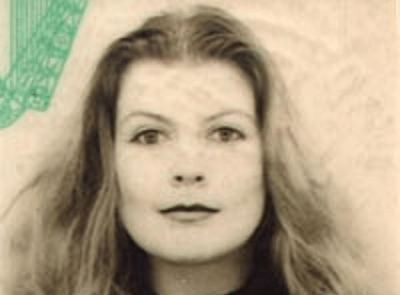
 Elaine Lennon is a film historian. She is the author of ChinaTowne: The Screenplays of Robert Towne and is widely published in international film journals.
She has a background in television production and film financing and was a lecturer for a decade in film studies and screenwriting at the School of Media, Dublin Institute of Technology.
Hup, Baby!
By Elaine Lennon
A body of asperitas cloud hung in the late afternoon sky. Gulls and terns danced and curled and soared and dived in the blanketing air above the white-tufted sea blunted by a smoky fog. As a rumble rose from beneath the churning waves the birds were buffeted and their cries rose and they dispersed east, out to the Atlantic. The offshore windfarm’s turbines suddenly creaked and croaked to a slow stop. Trasker’s eyes narrowed as he watched a ship’s flare on the barely legible horizon where grey skies met grey water with just a sliver of white dotted by multiple craft.
The sand tiger sharks had been washing up on the shores for days. There were clusters of them, adults who had been protecting their young. Their long thin ragged teeth had been exposed, cusps surrounded by bigger cusps, jaws revealed by predators, skin peeled by the weather.
Trasker rolled the radio dial until he could find reception. Choral Evensong from Norwich Cathedral on BBC Three. The descant haunted him. All the local channels had been wiped out when the digital power was gone. Bloody RTE, killing off the transmitters a decade ago and the phone companies insisting on Smart meters and Wi-Fi and everything else that wouldn’t work once the invaders hit a switch. Rank stupidity. Aeroplanes had fallen out of the sky. Poor things. He scanned the yellowy interface and hit the frequency for Radio Four and the Shipping Forecast. There was a change to the usual report.
As the Battle of the Celtic Sea rages most of the action concentrates around Plymouth, Fastnet, Sole and Biscay. Communication cables linking France with the United Kingdom, the United States and the Republic of Ireland have been blown up in a series of explosions believed to be connected with Russian nuclear submarines active in the area off the Republic’s southern coast since early November. Malin, Rockall and Shannon are understood to contain at least five Russian ships as well as submarines in unknown quantities. Fishing vessels have been bombed and there are understood to be many casualties. All airports in the Republic have closed with radar no longer functioning. Ports have been taken over by Russian forces all over the island of Ireland.
The light flickered on the dash. The flatbed truck was freighted with cans of kerosene. He had picked them up at the old Shell garage on the Sky Road. It had been abandoned so quickly the proprietor had forgotten to shut off the pumps or even lock the door. He filled the tank with diesel and replenished the three cans in the boot. He noted how much he was stealing so he could repay Smith when the place reopened. He took non-perishables and fresh eggs, bags of dog kibble so heavy he had to return three times to ensure there were enough to last weeks, pints of milk and packets of bacon and sliced cheese still cold from the fridge, nine-packs of toilet roll, Hob Nob biscuits, bars of Cadbury’s and a fresh box of Tayto that someone had been interrupted opening. He took bottles of brandy and whiskey for emergencies. Inebriation and inoculation, he figured. On his way out he saw the front page headlines on the last remaining newspapers – Celtic Sea Surrender. Surrounded. Russians Make Landfall.
Trasker shook his head. The Russians had been in Ireland for years. Nobody counted them. Nobody was looking. Nobody was thinking. Nobody remembered who they were and what they were capable of. History was a thing of the past. Hiding in plain sight. The enemy within. The Census figures were utter fiction, anyone could see that. It had only taken 15,000 of them to arrive in the Crimea and have it declared under occupation. What now for undefended Ireland with potentially hundreds of thousands of them waiting for the invasion to be formalised? Sleeper agents. They’d been lying in wait and now they were given the nod. The country had gone quietly. Not even a siren to warn the people. Too late now.
As he turned to the left to get into his truck, a sliver of a headlight briefly flashed in his wing mirror. Was it is his imagination? He floored it home as the clouds faded in the sky and the vehicle skidded along the deserted asphalt, window panes rattling with the force of the grinding gears.
Trasker hadn’t seen his nearest neighbour, Hazel Twiss, today. He pulled into the tree-lined driveway to her twilit glass bungalow perched on a scrubby outcrop. The Christmas tree was visible from his parking spot, twinkling with strings of white LED lights in the lounge that spanned the depth of the house. The front door was ajar. He took a hammer and chisel from the toolbox in the footwell of his passenger seat and crept up to the pretty porch that boasted piles of turf and willow baskets brimful of bladderwrack. He pushed the door back tentatively in case anyone was lying in wait behind it. From the hallway he saw Hazel’s legs sticking akimbo from behind the kitchen island and rushed forward. She had been hit on the head and lay in a stained pool of excreta, eyes and mouth wide open, blood seeping out in a viscous blob. Her iPhone was ten feet away on the tiles, screen shattered. She had a knitting needle in her left hand, now twisted and broken. He felt for her throat and a pulse that wasn’t there. Then he gently moved her head back and saw the telltale sign of a knife that had cut off her voice box.
He stood back and took in the otherwise undisturbed surroundings. Her cat Squeaky was miaowing non-stop from his bed near the Aga. Trasker peered at the harbour vista from Hazel’s sweeping sittingroom windows that opened onto a paved patio framed by shrubs and winter flowers. He watched as the turbines slowly collapsed into the waters, leaning left as the force of an explosion depleted their height. It was now completely still. Then a rumble that shook the earth causing a painful sound like a gigantic bird’s cawing suddenly erupted into another huge explosion, that rippled across the harbour and shook the building’s foundations. The milled arms slid completely under the sea.
“Van Doorn,” he said quietly and nodded to himself. The supposed episcopal Dutchman who had more than a nodding acquaintance with the Cyrillic alphabet and a penchant for baklava. Trasker knew the foreigner was growing marijuana hydroponically in his temperature-controlled cellar. Raising funds, evidently. Now he knew he needed his gun. He moved quickly.
He rolled his truck onto the empty road with the engine turned off and reversed the three hundred feet into his own property, to the car port at the side of his house. He left the keys in the ignition. He entered through the kitchen. The lights didn’t come on.
The electric power was gone. Trasker went out to the big wooden shed and switched on the generator. He had only ever given it a trial run before. He hoped for the best as the machine kicked in and started to beat steadily. Satisfied that it worked, he let it run. He crossed the yard and entered the garage and went straight to the floor to ceiling shelving unit to the rear. He pulled out a six foot ladder and found a large upright metal box lying flat on the uppermost shelf and unloaded its contents using a key on a chain hanging from the belt holding up his 501s. He took out the hunting gun and inserted bullets from a stash at the bottom of the box. He strapped the weapon into a harness on his shoulders. He put on a coalminer’s helmet with a mini-torch that sat in a knitted loop on the front. He flicked it on and off to make sure it was working. He checked a box of battery-operated torches and another of Tilley lamps. He located a bottle of paraffin in a cupboard and lit one lamp, putting it to one side to bring into the house. He picked out a cardboard box from a middle shelf. He removed an Auna Patagonia radio. He wound it up and it crackled and fizzed until he tuned into the World Service.
There are reports of explosions off the west coast of Ireland following surveillance by British Merlin helicopters in the area. The Republic is widely believed to be under siege from Russian ships and submarines. Transatlantic communication cables have been cut, the country’s radar system has been disabled and all radio and television broadcasting and mobile communications have been cut. Supply lines have been halted now that all ports are blockaded and Russian troops are believed to be entering the entire island from ships arriving hourly. Large numbers of people are being evacuated inland as land-based troops believed to consist of Russian immigrants established in the country assemble in major cities and some larger towns. RAF fighter planes are being readied at Northolt and other bases in England and Scotland while British and French naval vessels are engaged in fierce combat with Russian ships south of the Republic.
He turned down the volume. How he wished he’d planted more vegetables this year. Only three per cent of the country’s agricultural holdings were now used to produce food. The natives were going to be isolated and starved out. So much for Europe. He’d be scrounging the beach for carrageen moss. How long would it go on? He heard a whimper.
“Shush,” he said to nobody in particular as he checked his pocket for matches.
He snatched a look through the window out to the sea and saw a Morse Code signal blinking across the bay.
He was hit from behind. A burst blood vessel instantly blurred his vision. From the corner of his right eye he saw boots. Then he was being dragged by his legs across the cement to the shed, his face scraped by the rough ground.
“Do you know who I am, Irish?” asked Van Doorn as he sat Trasker against the warmly humming generator, binding his host’s wrists with twine.
“I don’t care, Boris,” mumbled Trasker, glancing past piled-up bags of briquettes he’d bought in Roscommon before they closed down the carbon-filled bogs.
“Think this is your castle,” said Van Doorn, tying up a petrol-filled bottle with a wet rag. “You’d let anyone into your country without a care. Don’t you know what borders are for?” He harrumphed a grim laugh.
“Níl aon thinteán le do thinteán féin,” said Trasker, looking straight into the deadeyed traitor’s sallow face.
The home invader was nonplussed.
“Words, that’s all you Irish are good for. And being invaded and colonized!” Van Dorn pulled a box of matches from his military jacket pocket.
Everything in Trasker’s brain was static as he looked at his mirror image one step ahead of him.
Van Doorn lurched towards him. Trasker craned his hurt neck around.
Van Doorn struck a match and enjoyed the quick flare of illumination.
“Hup, Baby!” shouted Trasker from his compromised position. Out of the shed’s cavernous corner leapt a creature the stranger had not expected. Didn’t even know existed. He saw the bared fangs first. Before he could adjust his senses the black and white beast had his teeth in the man’s right hand, forcing him to drop his pistol and bomb. The match went out. He was prepared for hand to hand combat with a surprised human victim, not a pup that had been bred to protect his companion at all costs, a sweet little Alsatian-sheepdog cross who practically talked to Trasker and took seriously everything the man told him. Baby was now all grown up and weighed in at an impressivly vicious two hundred pounds. Baby’s teeth ground down through the man’s flesh and into the bone and splintered it so it stuck out at weird angles. Then as the man tried to shake off the dog and pulled at the creature’s neck with his left hand, which grasped for a knife concealed on a plastic wrist grip, he slipped on the petrol leaking from his own improvised Molotov cocktail and fell back, knocking his head on the trolley Trasker kept for working on his engines.
Van Doorn’s head was at forty-five degrees to the floor. He kicked his legs out and scrambled but his boots couldn’t gain purchase on anything solid.
Baby gnawed at the twine on Trasker’s wrists, freeing them.
Trasker manouevred himself into a standing position, grabbed a hammer and crashed it down on Van Dorn’s left leg, then his right. The screams were unholy. Trasker trembled momentarily. Killing people is hard. Then he remembered what he had seen next door. You never knew with these guys. They were on a mission.
Trasker took the Russian’s pistol and moved swiftly forward, leaning down and shooting him in the temple. “That’s for Hazel,” he said. The man’s brains oozed into the petrol and the blood left a spray on Trasker’s anorak. He stepped across the corpse and went to the garage, returning to roll up the Russian’s remains in a tarpaulin stiff from cold. It was hard to manipulate. Trasker’s fingers were encrusted with blood. Once wrapped, he tied up the six foot package with rope.
“Bye, bye, Boris,”said Trasker, stepping over the funerary parcel. “If I’d have known you were coming I’d have baked a cake.”
He looked briefly to his right, to Hazel’s house, and blessed himself. He gathered Baby, that one-time lost orphaned soul, and thanked his lucky stars for the dog’s numinous presence as he ruffled his fur and hugged him and buried his head into his cradling body for saving his life. “Oh Baby Bear, Baby Bear,” he cried.
He pressed the Off button on the generator.
He put torches, essential foods, dog kibble, camping gas, the wind-up radio and bottled water into his North Face backpack. He had the Russian’s pistol and knife as well as his own rifle. He focused his torch on the ordnance survey map and checked his route. All the back roads, side roads, laneways were there to be followed as he plotted his path. He calculated it would take two nights, resting during daylight hours.
He locked up the house. Although, when all was said and done, what was the point? They’re already here. Still, best not to invite them in.
The distant harbour was ink black. The familiar girdle of lights that once encircled the area was gone but the sky was stitched with stars. Bonfires flamed on either end of the seafront. It was Christmas Eve. No bells rang.
Trasker shifted his harness and hoicked the rifle to sit more comfortably adjacent to his backpack and began his hike, Baby Bear at his side.
“Things can begin again, when this is over and they’re all gone,” Trasker assured Baby. The dog snuffled and looked straight ahead as the landscape stretched before them, dissolving into a fixity of black.
Trasker hummed N17. It was strangely festive.
His boots were soundless on the gravel track. He squinted at shadows. A man and his dog padding quietly on a thirty-mile trek to the Bens. The night swallowed them. Everything went dark.
© Elaine Lennon 2023
 The Galway Review