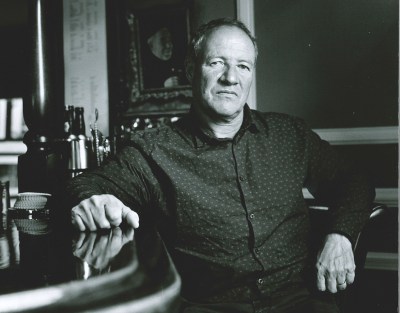
 John O’Donnell’s work has been published and broadcast in Ireland and abroad. Awards include the Irish National Poetry Prize, the New Irish Writing Awards for Poetry and Fiction, and in 2023 the RTE Francis McManus Short Story Award. He has published five poetry collections. His collection of short stories Almost the Same Blue (Doire Press) was longlisted for the Edge Hill Short Story Prize. Rainbow Baby, a play for radio, was broadcast on RTE’s Drama On One and won a prize at the New York Festivals Radio Awards. He lives and works in Dublin.
DEDICATION
By John O’Donnell
“Genuine bog oak, the handle,” said the bearded assistant, turning the letter-opener in his hands. “The blade’s silver. Well, silver-plated. Would you like it gift-wrapped?” But she’d declined, and when she’d left the craft-shop she’d discarded the box it came in, shoving it into her shoulder bag as she hurried along the street towards the bookstore.
The table where Greene was sitting was at the back. She joined the queue snaking through the shop. From time to time she leaned out to see how many were ahead of her: sixty, seventy, maybe more, but she was used to waiting. The shelves were crammed with colourful spines clamouring for attention, with more on tables and display stands. You could slip one into your bag and no-one would be the wiser, unless there was CCTV. Her eyes lifted to the ceiling, eventually locating the black glass eye above her, watching. Because you couldn’t trust anyone, really, even in a bookstore.
The line inched forward. Women, mostly. Did they all fancy him? He had been handsome, one time; he was more rumpled now, the sandy mane threaded with silver.
A woman behind her nudged her friend: “He’s much smaller in real life.”
The other woman snorted. “Stand him on his wallet, he’ll look taller.”
Greene’s early books – a collection of essays about Italian sculpture, a monograph on Bernini – had hardly sold at all. A small coterie of reviewers simpered over his slim novel re-imagining the life of Donatello, but the book had barely registered at the tills. “Before I wrote ‘Blessed Be The Fruit,’” said Greene once, “I was living on the clippings of tin. But after, well; afterwards, everything was different.” One or two critics had warned against it. ‘Exploitative… an unwarranted intrusion.’ But all the others adored it. ‘A light shone in a dark place,’ murmured The Guardian approvingly. The New York Times had been even more enthusiastic. ‘The Genius of Geoffrey Greene,’ the headline gushed. Greene. Where had that extra ‘e’ at the end come from? There was a rumour he’d stuck it on himself.
Near the front a woman in a red jacket dabbed at her hair, smoothing it into place. She touched her own hair; white now, cropped short against the nape of her neck. “We could colour it,” one of the hairdressers in the Unit suggested, “make it nice for your big day.” But she’d said no. Her hair was what it was; the lustrous copper curls that once fell to her shoulders were long gone. And when the day came, there were no celebrations. She’d slipped out through a side entrance into a taxi idling outside the high wall in the early morning. The flat they’d allocated to her was small and clean, on the third floor of a block built on the outskirts of a provincial town. “For your own safety,” the Unit Manager said, and she’d nodded, knowing that even if she’d wanted to, she never could go back to Barrow Road.
The queue shuffled towards the table. The posters beside Greene were the same as those plastered across the front window of the bookstore: the author, at an angle to the camera, looking ‘artfully enigmatic,’ as one critic had described him. Beneath the image was his name, and the title of the new book. ‘As It Is In Heaven,’ an account of an idyllic childhood in a seaside town, with atmospheric black and white pictures by a well-known photographer. “I suppose it is a memoir, of sorts,” said Greene ruefully to the TV presenter who’d interviewed him in his Monaco apartment a few weeks earlier. “But what is memory, really?” The presenter, a lanky boyish creature who had never quite grown up, purred with pleasure. “I sometimes wonder,” he said, “if ‘Blessed Be The Fruit’ is a kind of millstone around your neck?” Watching Greene on the tiny television in her room (in the Unit they called them ‘rooms,’ not cells) her skin prickled as he paused before he answered. “One does not wish to appear ungrateful,” he said eventually. “But if it is a millstone, one would have to acknowledge that it is worth its weight in gold.”
A man in a beige raincoat jiggled in excitement as his turn came.
“Permit me to shake the hand that wrote ‘Blessed Be The Fruit,’ he said.
“Well, now,” said Greene, setting down the Mont Blanc, “the hand that wrote that book did a lot of other things as well.”
The young lipsticked publishing assistant blushed.
“So clever,” the man hissed to his wife.
He grabbed Greene’s hand and shook it vigorously. Behind Greene the author’s agent – a tall, thoughtful man – chuckled.
“Who shall I say?” said Greene, his pen poised over the memoir’s title page.
“Richard,” the man replied.
Greene looked archly at the man’s wife. “And?”
“Oooh! Eh, Liz, please!” Behind her glasses the wife’s eyes shone. Her husband’s shoulders sagged.
“Richard and Liz,” said Greene.
He struck through his own name and wrote the inscription in quick fluent loops, adding his signature, two squiggles each prefaced by an ornate ‘G.’ The agent coughed, a signal that their audience was over. The man’s wife patted his arm and led him reluctantly away.
Lakeshore Drive, he’d called it. He’d turned the house into a granite mansion on its own grounds, instead of what it was: an undistinguished semi, pebble-dashed, with a child’s slide out front on the tussocky patch of grass. “Pure fiction,” he’d said after the book won the Athena Prize. “I make things up. I’m a writer; that’s what I do. Although, of course, there is always a seed…” There’d been a copy in the Unit; the film tie-in version, with a picture of the Oscar-nominated actress on the cover. She’d never read it, but others in the Unit had, even the staff, and she’d heard enough to know what he had written. What he had done.
A dark-haired girl in an emerald beret was next, and then two ladies. And then her.
“I love your work,” the girl said breathlessly.
“Well, thank you.” Greene cocked his head, taking her in. “I love your beret. You are?”
“Eve. Actually, I write myself. I’m working on a novel.” Her face coloured.
“Really? How interesting.” Whorls of ink issued from the Mont Blanc: For Eve – Best wishes for the craft.
“Would you like to see it? I think I have a copy here.” The girl began to rummage in her satchel.
“Ah. Perhaps some other time.” Greene smiled mirthlessly as he pushed the signed book towards her. “But I do hope you enjoy this.”
Her face radiant, the young girl had turned to walk back down the shop when Greene suddenly stood up.
“You,” he cried, pointing. “What are you doing here?”
Had he recognised her? They’d never met; he’d never even spoken to her. There had been pictures of her at the time, arriving at the courthouse. The tabloids had lifted images from her Facebook page, while the broadsheets and TV programmes used the one Sean had taken, nearly twenty years ago: they’d been walking in the hills, and she’d been tired and cold, and pregnant with Jamie, but he’d insisted, fiddling with the camera and telling her she looked sexy as she scowled at him, her russet hair whipping in the wind.
But it was the pair ahead of her Greene was addressing.
“And both of you looking so well, if I may say so!” said Greene, smiling as he resumed his seat.
The two ladies chirruped with delight.
“We wouldn’t miss a chance like this, would we, Olive?” said the elder one, closing in on her prey.
“Indeed, we would not.” The younger one elbowed her way in front of her companion. “Our favourite author – in the flesh!”
“That blazer is so elegant on you, Geoffrey; is it new?” Her cheeks pinkened as she said his name.
“Joan was saying the other day that your books are getting better and better, isn’t that right, Joan?”
The older one tittered.
Greene bowed, affecting modesty. “So kind.”
The agent flicked his sleeve, checking his watch.
“Lovely to see the two of you again,” said Greene, peering hopefully over their shoulders.
“Don’t leave it too long until the next one,” said Olive, with a little clap of her hands.
“Oh, yes,” said Joan. “And behave yourself in Monaco, you naughty boy!” She giggled again.
The agent stepped forward. “Thank you, ladies,” he said.
“Goodbye now!” said Olive.
“Bye, Geoffrey!” said Joan.
As they trotted away the agent looked down the line of remaining customers with an amused what can you do? eyeroll.
“Now,” he said, “who’s next?”
She’d sellotaped a note to the front door. I’m sorry. Please don’t go upstairs. He’d made it into a letter, pages and pages of spidery writing explaining how the voices had told her what to do. But there were no voices, never had been. What she’d kept hearing was like a roar of water, deafening, unbearable, a wave breaking over her endlessly, obliterating everything. Soon the children would hear it too; they would inherit it from her, she was certain. And so, she’d spared them, saving them from the pain, before it was too late. She’d eased them both into a kind of peace; and they were at peace, Jamie and Tessa, the two of them slumped over the kitchen table in the hush of that suburban afternoon, their unfinished bowls of pasta pushed aside, flecks of the tablets she’d ground to powder floating in the congealed tomato sauce. She’d carried them upstairs and laid them down under their brightly-coloured duvets. When Tessa seemed to stir she wondered should she use the pillow, but she hadn’t needed to in the end. This was love, not the Gothic horror Greene had created: the antique clawfoot bathtub, water cascading over the sides as one by one the mother held them down. Elijah and Abigail, he’d called them. But this was wrong as well. There was no way herself and Sean – poor, grief-stricken Sean, who now lay alongside Jamie and Tessa under the same headstone – would have given their son and daughter such ridiculous Old Testament names.
It wasn’t the prizes, or the money; he was welcome to that. It wasn’t the fame, although she’d had that as well, in a different kind of way. What she’d done had been sacred, a solemn ritual only a loving mother could perform. And Greene had desecrated it; the arcane language, the convoluted sentences. Every word he’d written was a violation.
She stepped forward.
Greene smiled, a weary automated smile. The assistant withdrew a copy of the memoir from the pile and placed it on the table, but she gently nudged it aside, producing instead a paperback of ‘Blessed Be The Fruit’ that she’d plucked earlier from a shelf. Half-turning toward the agent, the assistant gave a little cluck of displeasure: can she do this? The agent shrugged and glanced again at the queue; their booking for the restaurant was in ten minutes. Briefly he caught her eye, and although she looked away immediately, she was aware of his brow furrowing as he tried to work out why she seemed familiar before dismissing the idea.
Greene sighed, the pen resting in the groove of his finger as she opened the book’s title page. With a flourish he crossed out the printed version and signed his name.
She leaned in closer, watching the Mont Blanc scratching across the page. Her hand fumbled in her shoulder bag.
“And this is for?” said Greene, not looking at her.
A gasp came from behind him: the agent, his eyes widening as he touched the author’s shoulder.
“Geoff,” he whispered, a discreet counsellor advising a foolish king, “Geoff, I’m not sure you should…”
Greene looked up at her; she hadn’t answered his question.
“The dedication,” he said. “Who’s this for?”
The hand holding the pen was tanned, smooth. She imagined the shiny point piercing the skin, driving down through muscle and sinew, skewering Greene’s hand to the table.
“My children,” she said quietly.
Greene leaned forward, his other hand cupping an ear. “I’m sorry, I didn’t catch…”
She could smell his breath, a waft of peppermint that did not quite conceal trace elements of white wine.
“My children,” she said again, her fingers in the bag’s interior closing on the bog oak handle, the gleaming blade.
 The Galway Review