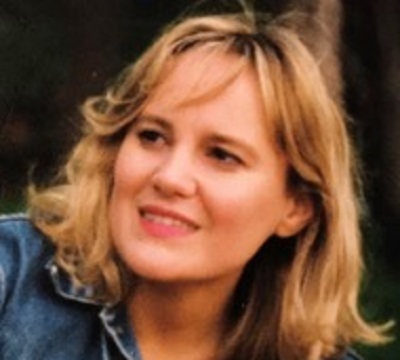
 Jess Sellers worked as a musician in various healthcare settings in the United States for twenty years, visiting patients in hospitals, nursing homes, hospices and memory care facilities. She heard many compelling stories particularly relevant to our ever-changing world. Patients spoke of the role nature played in their living and dying. They talked candidly of moments that changed them, of when the world suddenly looked and felt different, and their hope was restored.
“What Will You Remember at the End of Your Life emerged from these intimate moments, and from Jess’ own personal experience. Jess grew up on a pecan-tree farm, and trees have always been among her closet companions. She is currently working on her first book, “Stories From Beneath the Trees.
What Will You Remember At the End of Your Life?
By Jess Sellers
If a man stores up many such memories to take into life, then he is saved for his whole life. And even if only one good memory remains in our hearts, that alone may serve someday for our salvation—Fyodor Dostoyevsky, The Brothers Karamazov
Sometimes, when I’m quiet inside and touch the trunk of a tree, I feel its living memories: the sharp teeth of leaf-eating caterpillars, the smell of fresh life-giving rain, sparrow songs, summer cicada chants, the chill of first freeze, tiny ant feet brushing soft spring leaves. I feel the memories of long, painful droughts and glorious times of plenty. I feel the lungs of our earth, breathing in and breathing out.
The memories of trees are written in their every branch, leaf and root, and can be read in the rings wrapped around its heartwood. These memory-rings tell us stories that never grow old—stories of age, rainfall, temperatures, fires, snowfall, volcanic eruptions and the wellbeing of the ecosystem from which it was birthed.
Like trees, memories live in every part of us, too.
Memories make meaning, defy time, fly across the years. Yet they can be elusive, selective, true or false. Some memories mend us, others need to be mended.
Memories can stand between us and the life we want to live, while others shine within us like a bright star, illuminating the path before us. And sometimes, what we’ve forgotten may be shaping our lives far more than what we remember.
Growing up, I memorized the memories of my parents and grandparents; I begged to hear their stories. “Tell me again,” I would plead, “what was it like to get your water from a well?”
“What was the name of Uncle Benny’s pet crow?”
“How did you can fruit?”
“What was it like to grow your own food?”
“How did you come to have a pet fox?”
That was how I understood their lives, and eventually my own, through the rich storehouse of their memories.
Through the years, I’ve listened to many hundreds of memories. Teachers, doctors, garbage collectors, lawyers, preachers, farmers, accountants, artists, plumbers, housewives, an Oscar- winning actress. I’ve learned to pay close attention to what people remember, especially at the end of their lives. The themes woven into end-of-life memories are similar, though individual details are different.
Memories of what lies unresolved in the human heart, hidden by a busy life, starkly revealed in the final hours. Memories of tender mercies granted by strangers. Memories of vows kept and promises broken. Memories of love that let go too soon, or held on to too tight.
What will you remember at the end of your life?
My mother’s father vividly remembered the children’s Sunday school class he taught for thirty years, and the nightly prayers he prayed with his wife, Lucy. He remembered the beatings from his alcoholic father and remembered the vow he kept to never lay an angry hand on his own children.
At the end of her life, my mamaw (grandmother) recalled every slow-motion-detail of the day she saved her oldest son’s life after he was bitten by a rattlesnake. How she made a tourniquet from her yellow apron and tied it above the bite on his ankle. How he turned blue and black all over. How he bled through his eyes and the pores of his skin. What she remembered most, she said, fifty years after the event, was her son’s suffering. “His pain was something I could never forget. It’s as vivid as if it happened yesterday.”
In the final hours of his life my uncle T.D. remembered the early years of his married life in great detail. He spoke of close friends and happy moments spent with his wife Lucille. He remembered the day he realized his life-long dream of becoming a full time musician. This, while in the grip of severe dementia. “Hearing him talk about those times, and seeing him reach for my mother’s hand in his last hour, was a great comfort. It helped me understand better what really matters in life,” his daughter, P.A. said.
A one-hundred-and-one-year-old woman once told me her most striking life memory was the day of her mother’s funeral. She was seven years old. Later, her relatives argued among themselves about who would “have to take care of her.”
She remembered the cream-colored walls of the room where the arguing took place, the faded picture above the fireplace of a man praying, and the smell of a hot pecan pie sitting on the kitchen table brought by someone from the church. She remembered how her grandfather’s voice trembled when he said, “We’ll do it. Her grandmother and I will take care of her.” And she remembered the flood of relief that washed over her as she looked down at her small, shiny black shoes with the silver buckles. “I’m everything I am today because of my grandparents,” she said. “I’ve lost a husband, and I’ve lost a child, but no day stands out more in my life than that one. The day my grandparents took me in. Nowadays, I keep remembering it, over and over.” And she cried fresh tears during the telling, a one-hundred-and-one-year-old woman, crying the fresh tears of a seven-year-old girl.
Others remember words they wish had gone unsaid. Words that, if they could somehow take back, would now ease their dying, and would have eased their living too.
Some gain wisdom and peace through their remembering. They see rich meaning in the fragments, and the whole of their life finally comes together, moments before it’s gone.
I completely lost my memory once in a car accident. I was fifteen and knocked unconscious when my head hit and shattered the front windshield. When I woke, I found myself stretched out on the grass beside the car, my throbbing head resting in the lap of a kind stranger.
Looking into the azure-blue morning sky, I was struck blind by its beauty, its vastness, by the sunlight freely pouring itself into the sky, pouring itself into me.
I’m in heaven, I thought.
This is it.
I made it.
I found the sky so profoundly beautiful that I couldn’t see or feel anything but the sky. Not the woman holding me, not my hurting body, not the crashed car, not the gathering crowd.
I could not speak.
All I wanted was to stay wrapped up inside the sky’s loveliness, the sky’s openness, to be held in the forever-ness of its light.
I smiled.
Then groaned.
“What happened?” the woman gently asked, still holding me, stroking my head.
I didn’t know.
“What’s your name?”
I didn’t know.
“The sky…” I said, pointing.
Couldn’t she see that was all that mattered? Names didn’t matter. I didn’t matter.
“How do we contact your parents?”
Did I have parents?
I didn’t know.
I only knew the sky.
The more she questioned me, the more confused I became. My head ached, and her questions, like a dark veil, closed around me. I couldn’t answer any of them. I felt foolish, stupid. I closed my eyes. I lost hope.
I lost the sky.
“The ambulance is on the way,” she said, in a voice filled with kindness.
Later, in the emergency room, when I looked into the eyes of my mother, my memories slowly came back to me, in broken pieces; but would never quite be the same again.
Thirty-three years later, I can still feel the feeling of the sky. I can also feel the feeling of not being able to remember my name, my family, my surroundings, my life, myself. When I work with people living with Alzheimer’s and dementia, I remember how that confusion felt.
“Get out, I don’t have a son!” one man yelled at his fifty-year-old son.
“I’m not married,” another told her husband of more than sixty years. “And I’ve never been married.”
Their lives have no context; they’re always falling, falling, falling. They have no foundation to build their life upon, no memories to tell them who they are. I’ve sat with sobbing families who could no longer bear the painful indignity of this disease in their loved one, and over time, stopped visiting.
Where is the sky for these patients, their families, who have lost so much?
Where is their hope?
A brief respite, for some, can be found within old folk songs and dusty hymns, where pieces of their lives come home to them. Memories carried on the wings of melody and lyric that have more life in them than most sermons ever heard, pills ever taken, games ever played or movies ever watched.
Hush, little Baby, don’t say a word,
Mama’s gonna buy you a mockingbird.
And if that mockingbird don’t sing,
Mama’s gonna buy you a diamond ring.
“That was my mother’s favorite song,” one woman said, in a tender voice, who didn’t know her own name. “She would sing it to me at night. No matter how tired she was after a long day’s work, she would sing it.”
“What was your mother’s name?” I asked.
She smiled and shrugged, wrapped up in the comfort of the memory. “Oh honey, I don’t know.”
One of the first symptoms of Alzheimer’s disease is the inability to acquire new memories. Then, what was held most dear, gradually withdraws—the spoken and written word, the taste of favorite foods, the desire for touch, favorite television shows, faces of loved ones. And still, in the midst of all this loss, many can still sing every word to You Are My Sunshine and smile deeply into their lives while they sing it.
There’s a mystery and power in music I’ve never wholly understood. A power able to reach into unseen parts and bring back a memory that will part the sea of darkness, often for only a moment.
But a moment worth everything.
“I know why I’m still alive,” a woman said, after remembering a song she and her mother had sang together while they sat and shelled peas on the back porch.
Buffalo gals won’t you come out tonight
Come out tonight
Come out tonight
Buffalo gals won’t you come out tonight
And we’ll dance by the light of the moon
Once, I was working with a group of a dozen or more memory care residents when something different, something unexpected happened. We had been singing and drumming for ten minutes when the residents began singing their feelings. It was spontaneous, natural, and felt completely right. Several in the group sang “lonely,” others sang “fear,” and one or two sang “blue.”
“Why do you feel lonely?” I asked, unsure if I would get a cognizant answer.
“Because I’ve lost the people I love.”
“I can’t seem to talk with people anymore.”
“I have no hope.”
“I can’t drive.”
“Because food doesn’t taste good now.”
“I’m not home.”
They answered with a sense of urgency, a need, a hunger to be heard, and to be understood.
And I was stunned.
Many in the group had become aware of their own feelings, a rare thing in the moderate to late stages of Alzheimer’s disease.
Finally, a ninety-two-year-old woman shakily stood up and solemnly said, “Well, let’s make the decision that this day is beautiful.”
A man nodded and said, “She’s older than we are, we should listen to her. Besides, she’s the teacher in our class.”
The woman sat down.
And the moment was over.
I was so moved that several seconds passed before I could speak. What had just happened? We had all felt it. Their memories—alive, vibrant, safe, and still living within the innermost chambers of their hearts—had been drawn out for a brief and rare moment by a song. The disease of Alzheimer’s had not really erased their memories. It had only hidden them away in a far-away cavern, deep within themselves.
From that moment of revelation came the understanding that the friends and family members of a person living with Alzheimer’s have a profound and sacred role: that of memory keepers, of rememberers.
One origin of the word memory comes from the Old Norse mythology of Mimir, meaning “the rememberer” and “the giant who guards the Well of Wisdom.”
In the story of Mimir, the ‘Well of Wisdom’ lies beneath the roots of the world tree, Yggdrasill, a giant evergreen ash, the wellspring of all life in the universe. Mimir, the rememberer, guards the world tree, and becomes a guiding force during times of darkness and forgetfulness for generations to come.
Families and friends become Mimir(s), who guard their loved one’s “Well of Memories.” They keep them close and safe and alive within themselves. Then, when it is time, when their loved one leaves this world, they release the memories into the lives of their children and grandchildren and friends and nieces and nephews, trusting the memories will find their way to new dwelling places as treasured heirlooms.
Mimir paid a high price for his gift as rememberer. Through his enormous hardship, he grew into a deeper understanding and wisdom of life, and was a great help to others long after his death.
Growing up, I can hardly recall many of the gifts I received at holidays or birthdays, but I remember the red-and-white checkered apron my mamaw tied around her waist, and how, when I put my hands in her front pockets, I could feel broken pecan shells, thimbles and soft pieces of yarn. Her gingham apron hangs in my kitchen today.
I remember songs we sang together around the old, up-right family piano, songs I still sing today.
I remember how my mamaw’s hugs always smelled of homemade biscuits and garden tomatoes, scents that wrap around me today like the shelter and warmth of her arms.
Everything turns into memory, and every memory transforms into the song of our life. Memories are kept in our hearts and bodies, recorded in our stories, stored in the mountains, earth and sky, and memorialized in the trees. They are always shaping and revealing the poetry and pain we live by.
What deep memory inside you is asking to be heard? To be healed? To be understood? What song wants to be sung? It will never stop asking until it is heard, until it is sung.
The whole of your life-song will eventually become your profound end-of-life song, and when nothing else can be heard, and all else fades away and leaves you, the song will sing itself to you over and over again, from a far away place, singing back to you the life you have lived, and singing you forward into the new life you will enter.
 The Galway Review
What a beautifully crafted tapestry of thought, love, memories and life. This touched my heart. I will reread it as a gentle reminder of what pearls of experience need to be kept top of mind.