From Roots to Winds: Exploring Ndrek Gjini’s Poetic Landscape
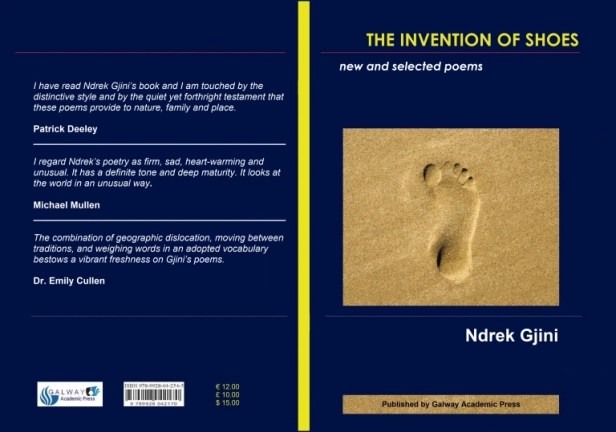
Ndrek Gjini’s “The Invention of Shoes” is a compelling collection of poetry that explores a wide range of themes with remarkable depth and emotional resonance. This collection, published by Galway Academic Press, offers readers a journey through the intricate layers of human experience, interwoven with reflections on nature, personal history, and societal issues.
The title poem, “The Invention of Shoes,” sets the tone for the collection. It reflects on the human disconnect from nature, symbolized by the creation of shoes which protect our feet but also alienate us from the earth. This poem, like many others in the collection, uses simple yet powerful imagery to convey complex ideas. Gjini writes, “But shoes… the invention of the shoe was an early one. / This damning invention – with its tenderness, / seduced human feet so much / as to make us not to feel the craving / for fervent kisses of the earth” . This poignant metaphor speaks to the broader theme of humanity’s estrangement from the natural world and the ensuing consequences.
Gjini’s poetry often delves into personal and familial histories, grounding his reflections in the experiences of his parents and ancestors. For instance, in “Roots of the Trees,” he draws a parallel between the diligent, unseen work of tree roots and the often unacknowledged sacrifices of parents: “The roots of the trees are / the most diligent servants. / They arise from seeds, / and live in the dark until they die” . This comparison highlights the quiet endurance and foundational role of parental figures, a recurring theme in Gjini’s work.
One of the standout pieces in the collection is “Letter to Nobel Prize Committee,” which humorously and poignantly suggests awarding the Nobel Peace Prize to “The Chair.” Gjini writes, “For thousands of years, / it endured the oppression of buttocks / and never complained” . This poem, while light-hearted, underscores the poet’s ability to find profound meaning in everyday objects and situations, a testament to his creative vision.
The influence of Gjini’s Albanian heritage and the turbulent history of the Balkans are evident in his poetry. “The Balkan View” and “Memories from the War in Winter” offer glimpses into the struggles and resilience of people in this region. His poem “The Train of My Life” encapsulates a personal journey marked by displacement and adaptation, as he recounts his experiences from Albania to various other lands: “This train passed through many / strange countries and cities, / regretful, unable to enjoy / the thrills and luxury that those places held” .
Gjini’s work is also imbued with a spiritual and philosophical dimension. Poems like “How To Read The Wind” reflect on loss and the enduring presence of loved ones, even after death. In this piece, he describes his mother’s last breath becoming the wind, a force that continues to communicate with him: “Her last breath became wind, / and it’s blowing wild / on this November day” . Such lines reveal Gjini’s capacity to blend the metaphysical with the tangible, creating a deeply moving poetic experience.
Despite the often somber themes, Gjini’s poetry is ultimately a celebration of life and human resilience. “Celebration” emphasizes the importance of living in the present and finding joy in each moment: “Thus, to live means to celebrate / every moment, which the present gives us” . This optimistic outlook provides a counterbalance to the more reflective and melancholic pieces, showcasing Gjini’s nuanced understanding of the human condition.
“The Invention of Shoes” also stands out for its linguistic achievement. Writing in his second language, English, Gjini demonstrates a mastery that enriches the language with the essence of Albanian culture and experience. His ability to convey complex emotions and thoughts with clarity and elegance is particularly impressive, adding a unique voice to contemporary English-language poetry.
Ndrek Gjini’s “The Invention of Shoes” is a rich and varied collection that invites readers to explore the depths of human experience through the lens of poetry. Gjini’s skillful use of imagery, his poignant reflections on personal and collective histories, and his philosophical insights make this a must-read for poetry enthusiasts. Each poem in the collection is a testament to Gjini’s profound understanding of life, making “The Invention of Shoes” a valuable contribution to the literary world.
Dr. Annand Goldsmith
 The Galway Review